
The non-habitual resident regime is closed to new arrivals. Its replacement keeps the 20% rate and the ten-year term, but adds an activity test the old regime never had — and drops pensioners entirely.
For more than a decade, Portugal was the default answer to the question of where to move in Europe. The non-habitual resident regime offered ten years of favourable treatment, a 20% rate on qualifying Portuguese income and broad exemption on foreign income, including pensions at a flat 10%. It closed to new entrants after 2024.
What replaced it is the Incentivo Fiscal à Investigação Científica e Inovação — IFICI, commonly called NHR 2.0. The headline numbers survived almost unchanged. The eligibility did not, and the difference decides whether Portugal still works for you.
Portugal follows a residence taxation model. Residents are taxed on worldwide income at progressive IRS rates reaching 48%, with an additional solidarity surcharge on higher incomes. Non-residents are taxed on Portuguese-source income. IFICI sits on top of that as a time-limited alternative for people who qualify.
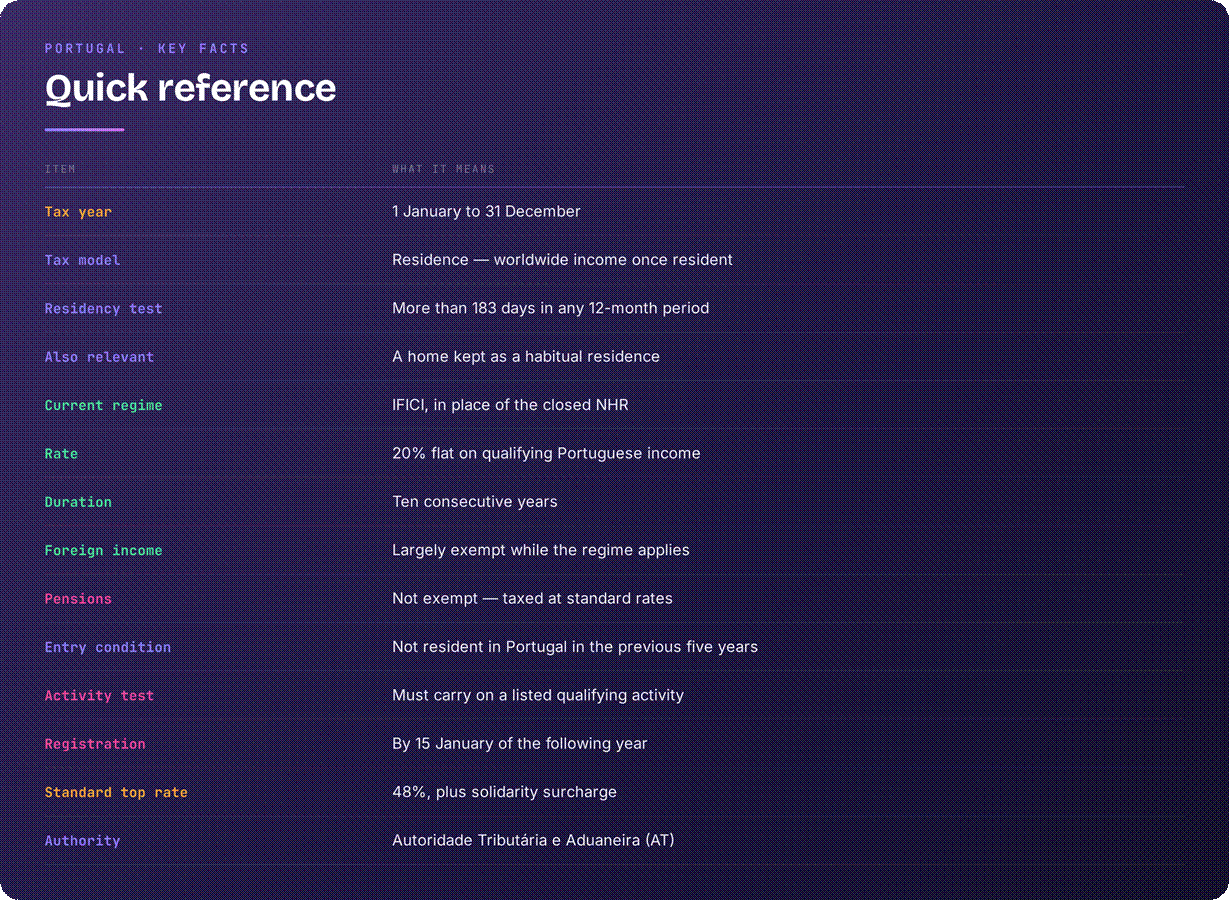
The Portuguese position at a glance.
Your residency status is the first step
Establish your position before assessing how your income is treated. You become Portuguese tax resident if you spend more than 183 days in Portugal in any 12-month period, or if you spend fewer days but maintain a home there in circumstances suggesting an intention to keep it as a habitual residence.
That second limb is the one that surprises people. Renting an apartment you return to between trips can establish residence on well under 183 days, because the test looks at the character of the accommodation and your intention rather than at the count alone.
Maintain accurate records of:
• Arrival and departure dates across rolling 12-month periods;
• Days physically spent in Portugal in each calendar year;
• Accommodation arrangements, including lease start and end dates;
• Where your family is resident;
• The location of your business interests and main investments; and
• Any other country that may also treat you as resident.
If two countries both claim you, a double taxation agreement may resolve it. Portugal has an extensive treaty network, but a treaty allocates taxing rights against your actual facts — it does not remove obligations on its own, and the tie-breaker sequence must be worked through properly.
What IFICI actually gives you
IFICI charges a flat 20% on Portuguese-source employment income (Category A) and self-employment income (Category B) derived from an eligible activity, for ten consecutive years. Against a standard scale reaching 48% plus surcharge, the saving for a higher earner is substantial.
Most foreign-source income is exempt while the regime applies. The exception is deliberate and it is the whole story for retirees:
Income | Treatment under IFICI |
Portuguese income from the eligible activity | 20% flat rate |
Other Portuguese-source income | Standard IRS rules |
Foreign employment income | Exempt |
Foreign self-employment income | Exempt |
Foreign dividends and interest | Exempt |
Foreign rental income | Exempt |
Foreign capital gains | Exempt |
Foreign pension income | Taxed at standard progressive rates |
Income from a blacklisted jurisdiction | Exempt treatment not available |
The pension exclusion is not an oversight. The old NHR taxed qualifying foreign pensions at a flat 10% and drew large numbers of retirees to Portugal. IFICI removes that entirely, and the regime is now structured to attract working activity rather than retirement income.
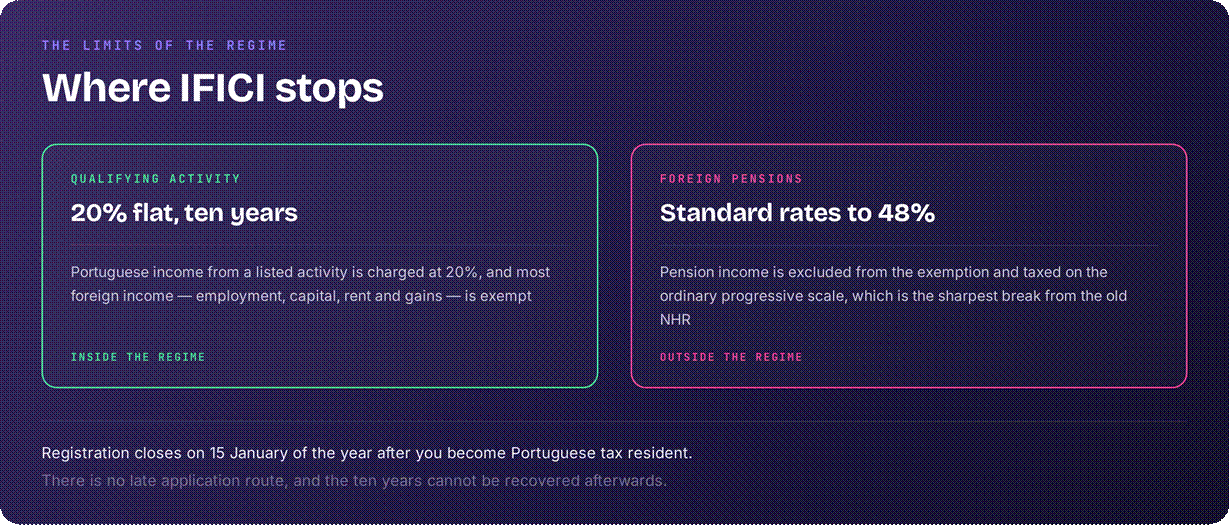
The activity test decides eligibility — and pensions sit outside the exemption.
The activity test is the real gate
The old NHR asked only that you had not been Portuguese tax resident in the previous five years. IFICI asks that, and then asks what you do. Eligibility depends on carrying on a qualifying activity, broadly covering:
• Higher education teaching and scientific research, including roles within the national science and technology system;
• Qualified roles and board positions in companies benefiting from investment support regimes;
• Highly qualified professions in companies meeting specified export or activity criteria;
• Research and development roles where the costs qualify for R&D tax incentives;
• Roles in certified startups; and
• Qualified roles in entities carrying on economic activities recognised as relevant to the national economy.
The practical effect is that a self-employed remote worker with foreign clients and no Portuguese employer often does not fit any category cleanly. The regime was designed to draw specific kinds of skilled activity into the Portuguese economy, not to provide a general low-tax landing spot for the location-independent.
Registration has a hard deadline
You must register for the regime by 15 January of the year following the year in which you become Portuguese tax resident. Miss it and the ten years are gone — there is no late application route, and the deadline has already caught people who assumed it worked like NHR registration.
Qualification also requires that you have not been Portuguese tax resident in any of the previous five years, and that you become resident in the year to which the application relates.
Case study: Elena qualifies, Robert does not
Elena is a research engineer who takes a role with a certified Portuguese startup in March. She has never been Portuguese tax resident. Her role falls within the qualifying activities, so she registers by the following 15 January and pays 20% on her Portuguese salary. Her foreign dividend income is exempt.
Robert is a retired consultant who moves to the Algarve the same year, living on a UK pension and an investment portfolio. He carries on no qualifying activity, so IFICI is unavailable to him. His pension is taxed at standard Portuguese progressive rates, as is his worldwide income generally.
Two people, the same move, the same year. The difference is not their income — it is whether they are working in a listed activity.
If you do not qualify
Standard Portuguese rules apply. Residents are taxed on worldwide income at progressive IRS rates reaching 48%, with a solidarity surcharge on higher incomes. Capital gains on securities are taxable, with partial exclusions available in some cases, and property gains have their own treatment and reliefs.
Portugal remains a reasonable place to live and work, with a wide treaty network and a functioning foreign tax credit. It is simply no longer a low-tax jurisdiction by default, and any plan built on guidance written before 2024 needs rebuilding.
Filing and the compliance calendar
The Portuguese tax year follows the calendar year. The annual IRS return is filed between 1 April and 30 June of the following year, through the Portal das Finanças. Confirm the dates published for your filing year, because the timetable is set annually.
An exemption is not an exemption from filing. Exempt foreign income under IFICI still generally has to be declared, and the regime limits what Portugal taxes rather than whether you report. Prepare in good time:
• Portuguese employment or self-employment records;
• Documentation evidencing the qualifying activity;
• Foreign income statements by country and category;
• Evidence of foreign tax paid;
• Your NIF and Portal das Finanças access details;
• Travel and day-count records supporting your residence position; and
• Proof of non-residence in the previous five years.
Timing matters more than the headline rate
Ten years is a long planning period, but the entry conditions are narrow and the deadline is fixed. Model your position before you move, considering:
• Whether your role genuinely falls within a listed qualifying activity;
• Whether you will become resident early or late in the calendar year;
• Whether any pension income makes the regime materially less attractive;
• Whether foreign gains should be realised before or after residence begins;
• Whether your five-year non-residence history is documented;
• Whether a treaty protects income the regime does not; and
• What happens in year eleven, when standard rates apply in full.
Your Portugal checklist
1. Confirm you were not Portuguese tax resident in any of the previous five years;
2. Check whether your role falls within a listed qualifying activity;
3. Track days across rolling 12-month periods, not just the calendar year;
4. Consider whether accommodation alone could establish residence;
5. Identify the year in which residence begins, because the deadline follows it;
6. Diarise 15 January of the following year for registration;
7. Separate pension income from other foreign income when modelling;
8. Review the treaty position between Portugal and your other countries;
9. Keep evidence supporting the qualifying activity for the full ten years; and
10. Plan for year eleven before you reach it.
Frequently asked questions
Can I still apply for NHR?
No. The non-habitual resident regime is closed to new entrants. Transitional arrangements applied to people who became resident, or had qualifying arrangements in place, by the relevant 2024 cut-off. Anyone arriving now applies under IFICI instead.
Are foreign pensions exempt under IFICI?
No. Foreign pension income is taxed at Portugal’s standard progressive rates. The old NHR applied a flat 10% to qualifying foreign pensions, and its removal is the clearest reason the new regime does not suit retirees.
Does IFICI work for a freelancer with foreign clients?
Often not. Eligibility turns on carrying on one of the specified qualifying activities, generally tied to research, highly qualified roles, certified startups or companies within particular incentive regimes. Independent remote work for overseas clients does not automatically fit any of them.
When do I have to register?
By 15 January of the year after you become Portuguese tax resident. There is no general late application route, so the deadline should be diarised from the moment residence begins rather than left to the accountant who files your first return.
How long does the regime last?
Ten consecutive years from the year you become resident and qualify. It is not renewable, and the clock runs whether or not you benefit from it in a given year.
Do I still have to file during the ten years?
Yes. The regime limits what Portugal taxes, not whether you report. Exempt foreign income generally still has to be declared on the annual IRS return.
Is the 20% rate applied to all my Portuguese income?
No. It applies to employment and self-employment income from the eligible activity. Other Portuguese-source income falls under the ordinary rules and rates.
What happens if my role changes during the ten years?
Eligibility depends on continuing to meet the conditions, so a move into a role outside the qualifying activities can affect your position. This is worth checking before accepting a change rather than after.
Official sources and further reading
• Autoridade Tributária e Aduaneira
Important information
This article is general information and does not constitute tax, legal, immigration or financial advice, and does not create a client relationship. Tax outcomes depend on travel history, income sources, treaty status and the law applying to the relevant year. Rates, thresholds and regimes change, and some measures described may be proposed rather than enacted; this article reflects our understanding as at the date of publication. Obtain advice from a suitably qualified professional before acting or refraining from action.
