
Qatar does not tax salaries. It does tax Qatari-source business income, and it has one of the largest treaty networks in the region — which makes the residency certificate genuinely valuable.
Qatar levies no personal income tax on salaries and wages. What it does tax is activity: income arising from a business or professional activity carried on in the State.
The governing law is Law No. 24 of 2018, which repealed the previous Income Tax Law No. 21 of 2009 on 13 December 2018. Executive Regulations implementing it were published on 11 December 2019 and took effect the following day.
Under that framework, tax is imposed on a taxpayer’s Qatari-source income. Natural persons who are Qatari or GCC nationals are exempt, as are entities wholly owned by them. A non-Qatari natural person carrying on activity in the State is within the charge on the income from that activity.
The standard rate is 10%. There are two regimes operating in parallel: the State of Qatar regime administered by the General Tax Authority, and a separate Qatar Financial Centre regime operated by the QFC Tax Authority, each with its own rules.
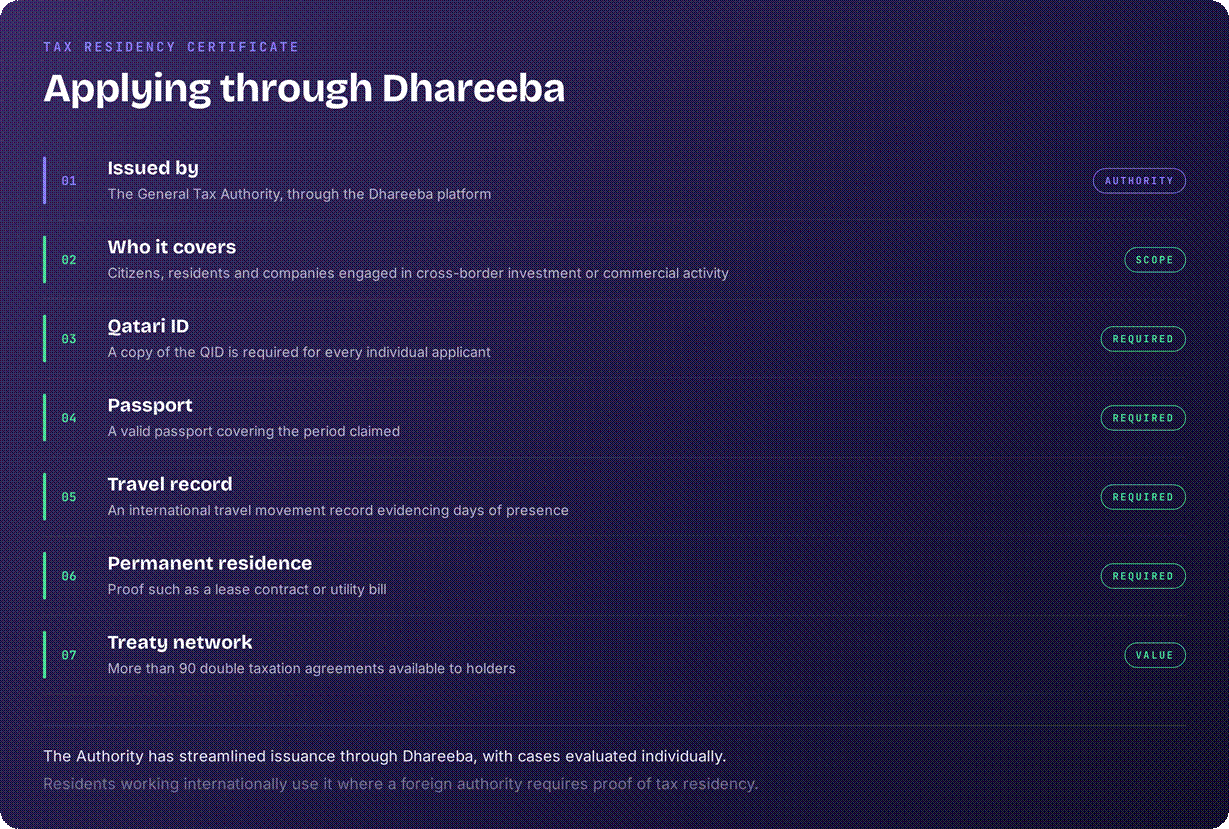
What the certificate application requires.
Your residency status
Under Qatari tax law, a natural person is defined as resident if any one of three conditions is met:
• They have a permanent home in the State of Qatar;
• They have been in the State of Qatar for more than 183 consecutive or separate days during any twelve-month period; or
• They have their centre of vital interests in the State of Qatar.
The permanent home limb operates without any day count at all, which is the point most often missed. Someone maintaining a home in Doha may be resident on that basis alone, regardless of how much time they spend there.
The twelve-month period is rolling rather than aligned to the calendar year, so a stay straddling a year end can cross the threshold without reaching it in either calendar year.
The tax residency certificate
The General Tax Authority issues the certificate, and it has been explicit about its purpose. The Director of Agreements and International Cooperation described it in June 2026 as a key legal document enabling individuals and companies to benefit from Qatar’s double taxation agreements, applying to citizens, residents and companies engaged in cross-border investments or commercial activities.
Qatar has a network of more than 90 double taxation treaties. That is among the largest in the Gulf, and it is what makes the certificate worth obtaining even for someone whose Qatari tax liability is nil. Holders can use the network to reduce or eliminate foreign tax on income, deposits or shares, and residents working internationally can produce it where a foreign authority requires proof of residency.
Applications are made through the Dhareeba platform, which the Authority has streamlined for faster processing, with cases evaluated individually.
For an individual, expect to provide:
• A copy of the Qatari ID, the QID;
• A valid passport;
• An international travel movement record evidencing days of presence;
• Proof of permanent residence, such as a lease contract or utility bill; and
• An employment contract.
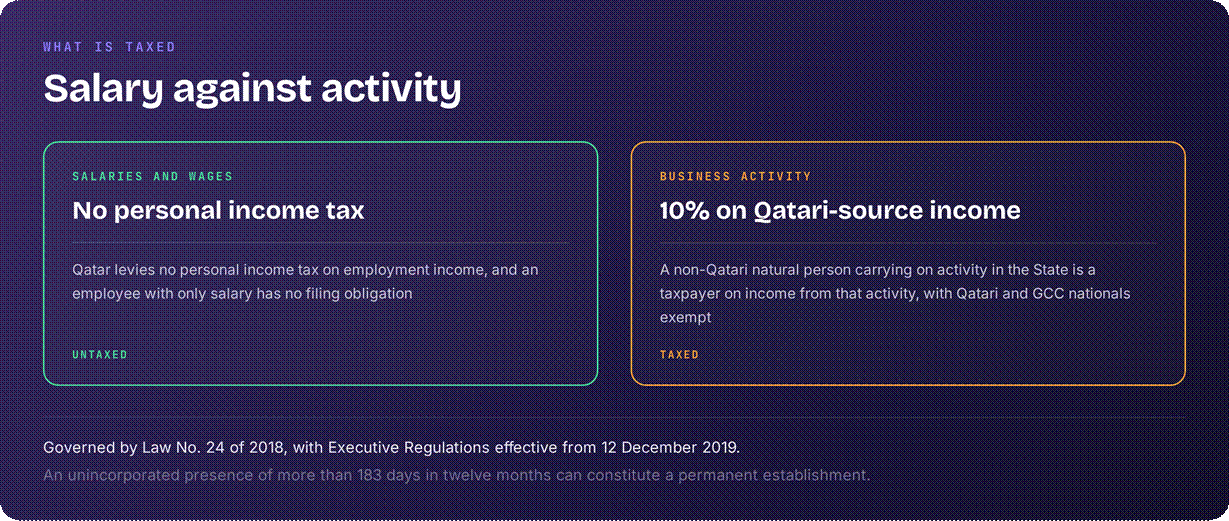
Salary against activity.
Self-employment income
For a freelancer or consultant the analysis turns on nationality and on where the activity is carried on.
A Qatari or GCC national natural person is exempt under the Executive Regulations. A non-Qatari natural person carrying on activity in the State is a taxpayer on the income from that activity, at the standard 10% rate on Qatari-source income.
Two points follow. First, the charge attaches to the activity rather than to the individual, so the source of the income and the place where the work is performed both matter. Second, an unincorporated presence in Qatar for more than 183 consecutive or separate days in twelve months can constitute a permanent establishment, which brings its own consequences.
Anyone carrying on activity in Qatar should establish their position formally rather than assuming that the absence of a salary tax means the absence of any tax.
Case study: Layla and the permanent home
Layla works in Doha for three years and keeps her apartment on after taking a role elsewhere in the region, returning periodically. She assumes that because she now spends well under 183 days in Qatar, she is no longer resident there.
The day count is only one of three limbs. Having a permanent home in the State of Qatar is sufficient on its own, without any day requirement. On those facts she may remain a Qatari tax resident.
Whether that helps or hurts depends on what she needs. If she is seeking to evidence residency for a treaty claim, it may assist. If she is trying to demonstrate that she has left, retaining the apartment works against her.
What makes Qatar attractive
The combination is strong, particularly for an employee:
• No personal income tax on salaries and wages;
• A treaty network of more than 90 agreements, among the largest in the Gulf;
• A streamlined certificate procedure through the Dhareeba platform;
• A permanent home route to residency requiring no day count, useful where residency needs evidencing;
• Exemption for Qatari and GCC national natural persons from the activity charge;
• A 10% rate on business income, low by international standards; and
• A separate QFC regime with its own rules for those operating within it.
The honest qualifications are that business and professional activity is taxed, that the permanent home limb can attach residency you did not intend, and that a prolonged unincorporated presence can create a permanent establishment.
Filing and the compliance calendar
An employee with only salary income has no Qatari filing obligation. A person carrying on activity in the State registers with the General Tax Authority through Dhareeba and files on the applicable cycle.
Keep in good order:
• An international travel movement record covering each twelve-month period;
• Evidence of whether you maintain a permanent home in Qatar;
• Records bearing on where your centre of vital interests lies;
• Your QID, passport, lease or utility bill and employment contract;
• Records of any activity carried on in the State and its source; and
• Certificates obtained, noting their validity period.
Three limbs, and only one counts days
Consider:
• That a permanent home alone can make you resident;
• That the 183-day period is rolling rather than calendar-based;
• That the centre of vital interests is a third and separate route;
• That salaries are untaxed but activity in the State is not;
• That Qatari and GCC national natural persons are exempt from the activity charge;
• That the treaty network exceeds 90 agreements; and
• That the certificate is applied for through Dhareeba.
Your Qatar checklist
1. Test all three residency limbs, not just the day count;
2. Note that a permanent home alone is sufficient;
3. Treat the 183-day period as rolling, not calendar-based;
4. Consider where your centre of vital interests lies;
5. Distinguish salary income from activity carried on in the State;
6. Note that Qatari and GCC nationals are exempt from the activity charge;
7. Apply for the certificate through the Dhareeba platform;
8. Gather your QID, passport, travel record, lease and contract;
9. Check whether a prolonged presence creates a permanent establishment; and
10. Use the certificate against the 90-plus treaty network.
Frequently asked questions
Does Qatar tax salaries?
No. Qatar levies no personal income tax on salaries and wages. What it taxes is income arising from a business or professional activity carried on in the State.
How do I become tax resident?
Through any one of three conditions — having a permanent home in Qatar, being in Qatar for more than 183 consecutive or separate days in any twelve-month period, or having your centre of vital interests in Qatar.
Can I be resident without spending much time there?
Yes. The permanent home limb operates with no day count at all, so maintaining a home in Qatar can make you resident on that basis alone.
How do I get a tax residency certificate?
Through the Dhareeba platform, from the General Tax Authority. You will need your QID, a valid passport, an international travel movement record, proof of permanent residence such as a lease or utility bill, and an employment contract.
Why is the certificate valuable if I pay no Qatari tax?
Because Qatar has more than 90 double taxation agreements. Holders can use that network to reduce or eliminate foreign tax on income, deposits or shares, and foreign authorities frequently require proof of residency before allowing a claim.
Is self-employment income taxed?
For a non-Qatari natural person carrying on activity in the State, yes — on the Qatari-source income from that activity, at the standard 10% rate. Qatari and GCC national natural persons are exempt.
What law governs this?
Law No. 24 of 2018, which repealed Income Tax Law No. 21 of 2009 on 13 December 2018. Executive Regulations were published on 11 December 2019 and took effect the following day.
What is the QFC regime?
A separate tax regime operated by the Qatar Financial Centre Tax Authority, running in parallel with the State of Qatar regime administered by the General Tax Authority. Each has its own rules, so establish which applies to you.
Official sources and further reading
Important information
This article is general information and does not constitute tax, legal, immigration or financial advice, and does not create a client relationship. Tax outcomes depend on travel history, income sources, treaty status and the law applying to the relevant year. Rates, thresholds and regimes change, and some measures described may be proposed rather than enacted; this article reflects our understanding as at the date of publication. Obtain advice from a suitably qualified professional before acting or refraining from action.
