
Saudi Arabia does not tax expatriate employment income. It does tax a non-Saudi resident who carries on business activity in the Kingdom, at 20% — which catches freelancers and consultants.
The Saudi position is frequently summarised as no income tax for expatriates. That is accurate for salary and inaccurate for anything else, and the distinction runs through the whole of this article.
The Income Tax Law, adopted on 6 March 2004, sets out at Article 2 the persons required to pay income tax. Among them, at paragraph (b), is a natural resident non-Saudi person who carries out commercial activity in the Kingdom.
Article 7(A) sets the rate for that person at 20%. Article 6(B) defines the tax base as their taxable income from any activity from the Kingdom’s resources, less the expenses approved under the law.
So the structure is: employment income of an expatriate is outside the charge, and business or professional activity carried on in the Kingdom by a non-Saudi resident is taxed at 20% on profit. Saudi and other GCC nationals fall under Zakat instead, from which expatriates are exempt.
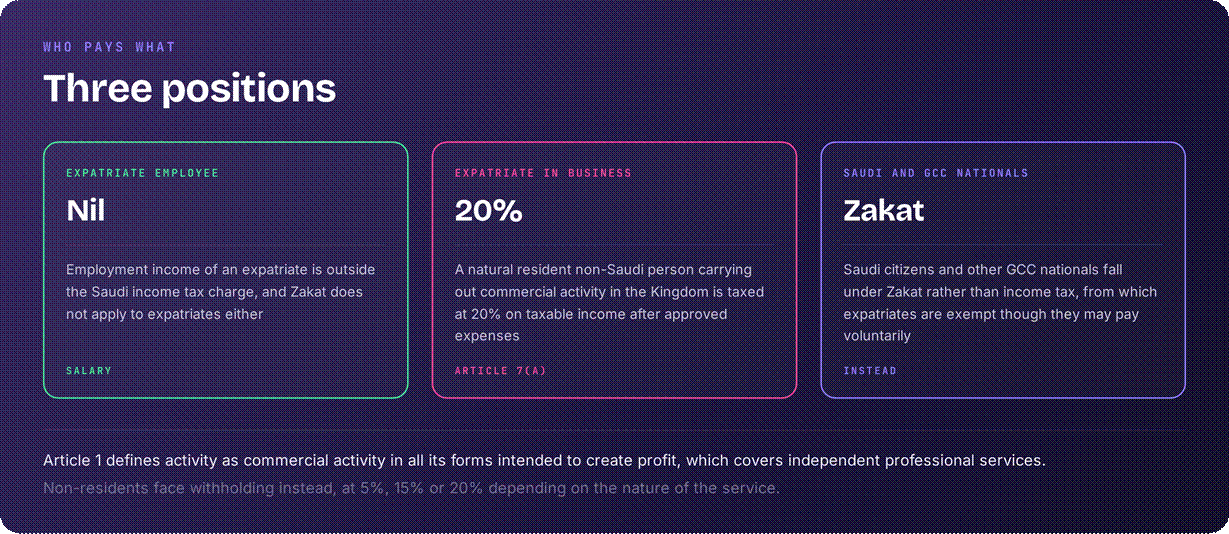
Three positions, three different charges.
Your residency status under Article 3
Article 3(A) defines residence for the purposes of the law. A natural person is considered resident in the Kingdom during a tax year if either of the following is satisfied:
• They have a permanent residence in the Kingdom and reside there for a minimum of 30 days in the tax year; or
• They reside in the Kingdom for a minimum of 183 days in the tax year.
Two mechanical points matter. Residence in the Kingdom for part of a day is counted as residence for a full day. And a person who is only transiting through the Kingdom is not counted.
The 30-day limb is the one that surprises people. Someone who maintains a permanent home in the Kingdom needs only a month of presence across the year to be resident, and days of presence before an assignment formally begins count toward the total.
The tax residency certificate
ZATCA, the Zakat, Tax and Customs Authority, issues an electronic Tax Residency Certificate to individuals and companies confirming tax residency for treaty purposes. The application is free.
The route is through the ZATCA portal: log in, go to E-Services, then General Services, then the Tax Residency Certificate Service, and complete the required information. Applications can also be made in person at a ZATCA branch office.
The prerequisites reflect Article 3. A person who owns a permanent residence is allowed to stay in the Kingdom for 30 days; those without a permanent residence need 183 days, whether connected or dispersed. Alongside that you will need a valid passport, proof of residency, and an employment verification letter, with clear copies of each.
Certificates are typically valid for one year. Saudi Arabia has tax agreements in place with around 56 countries, and the certificate is what allows you to invoke them.
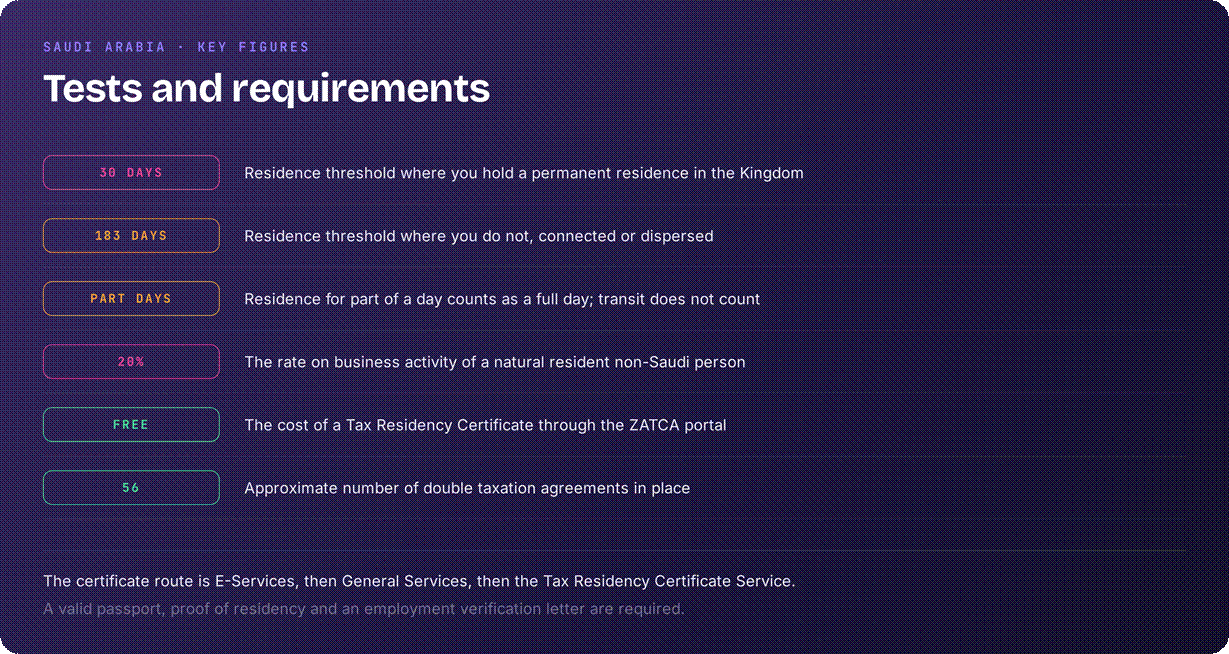
The thresholds and the documents required.
Self-employment in detail
For a freelancer, consultant or independent professional, the 20% charge is the central fact about Saudi Arabia and it is routinely missed.
The charge attaches to a natural resident non-Saudi person carrying out activity in the Kingdom. Article 1 defines activity as commercial activity in all its forms intended to create profit, which is broad enough to cover professional services carried on independently.
The base is taxable income from activity from the Kingdom’s resources, after approved expenses. It is a profit-based charge rather than a turnover one, which distinguishes it from the gross-revenue regimes found elsewhere in this series.
Anyone subject to tax on commercial activities needs a tax identification number, obtained by registering with ZATCA.
Non-residents and withholding
A non-resident earning income or doing business in the Kingdom, such as a consultant carrying out work there, faces withholding tax rather than assessment. The payer is obliged to hold back the amount.
Rates vary by the nature of the service. Management fees attract 20%. Royalties, and consultancy, technical and international telecommunication services paid to a head office or affiliated company, attract 15%. Payments for services to a head office or related party attract 15%. Consultancy and technical services other than to a head office or affiliate, together with rent, air tickets, freight, dividends, interest on loans and insurance or reinsurance premiums, attract 5%. Other payments attract 15%.
Case study: Omar and the trade licence
Omar moves to Riyadh on an employment contract. His salary is outside the Saudi income tax charge, and there is nothing for him to file on it.
Two years later he leaves employment and begins consulting independently for Saudi clients under his own licence. He is now a natural resident non-Saudi person carrying out commercial activity in the Kingdom. Article 7(A) applies, and his consulting profit is taxed at 20%.
Nothing about his residence changed. What changed was the character of his income, and with it his liability from nil to 20% on profit. Anyone contemplating that transition should model it before making it.
What makes Saudi Arabia attractive
For an employee the position is very strong, and for a business owner it is at least predictable:
• No income tax on expatriate employment income;
• Exemption from Zakat, which applies to Saudi and GCC nationals rather than expatriates;
• A residency test with a clear 30-day route for those holding a permanent residence;
• A free electronic Tax Residency Certificate available through the ZATCA portal;
• Around 56 double taxation agreements to invoke with it;
• A profit-based rather than turnover-based charge on business activity; and
• Approved expenses deductible in arriving at the taxable base.
The honest qualifications are that self-employment and business activity are taxed at 20%, that the 30-day residence limb catches people who assume a short presence is safe, and that non-residents face withholding at rates up to 20% depending on the service.
Filing and the compliance calendar
An employee with only salary has no Saudi filing obligation. Anyone carrying on commercial activity must register with ZATCA, obtain a tax identification number, and file on the applicable cycle.
Keep in good order:
• Day-count records, noting that part days count as full days;
• Evidence of whether you hold a permanent residence in the Kingdom;
• A current Tax Residency Certificate from the ZATCA portal;
• Your passport, proof of residency and employment verification letter;
• Business income and approved expense records, if self-employed; and
• Withholding certificates for any payments made to non-residents.
The character of the income decides it
Consider:
• That expatriate employment income is outside the charge;
• That business activity of a non-Saudi resident is taxed at 20%;
• That Article 1 defines activity broadly, covering professional services;
• That the base is profit after approved expenses, not turnover;
• That 30 days plus a permanent residence makes you resident;
• That part of a day counts as a full day; and
• That the certificate is free and obtained through the ZATCA portal.
Your Saudi Arabia checklist
1. Establish whether your income is employment or business;
2. Note that business activity attracts 20% under Article 7(A);
3. Check both residency limbs — 30 days with a permanent residence, or 183 without;
4. Remember part of a day counts as a full day;
5. Exclude days spent only in transit;
6. Apply for a Tax Residency Certificate through the ZATCA portal;
7. Gather your passport, proof of residency and employment verification letter;
8. Register with ZATCA for a tax identification number if in business;
9. Keep records of approved expenses against business income; and
10. Check the withholding rate applying to any non-resident you pay.
Frequently asked questions
Do expatriates pay income tax in Saudi Arabia?
Not on employment income. But a natural resident non-Saudi person who carries out commercial activity in the Kingdom is required to pay income tax under Article 2(b), at 20% under Article 7(A).
What counts as commercial activity?
Article 1 defines activity as commercial activity in all its forms that is intended to create profit. That is broad enough to cover professional and consulting services carried on independently, not only trading businesses.
How is the 20% calculated?
Article 6(B) defines the base as taxable income from any activity from the Kingdom’s resources, excluding the expenses approved under the law. It is a profit-based charge rather than a turnover one.
How do I become tax resident?
Under Article 3(A), by having a permanent residence in the Kingdom and residing there at least 30 days in a tax year, or by residing there at least 183 days in a tax year. Part of a day counts as a full day, and transit does not count.
How do I get a tax residency certificate?
Free, through the ZATCA portal — log in, go to E-Services, then General Services, then the Tax Residency Certificate Service. You can also apply in person at a ZATCA branch. You will need a valid passport, proof of residency and an employment verification letter.
How long is the certificate valid?
Typically one year. Saudi Arabia has tax agreements with around 56 countries, and the certificate is what allows you to claim under them.
Do I pay Zakat?
No. Zakat applies to Saudi citizens and other GCC nationals. Expatriates are exempt, though they may choose to pay voluntarily.
What if I am a non-resident doing work in the Kingdom?
You face withholding rather than assessment. Rates depend on the service — 20% on management fees, 15% on royalties and on consultancy or technical services paid to a head office or affiliate, 5% on certain consultancy, rent, freight, dividends and interest, and 15% on other payments.
Official sources and further reading
• ZATCA — Tax Residency Certificate service
Important information
This article is general information and does not constitute tax, legal, immigration or financial advice, and does not create a client relationship. Tax outcomes depend on travel history, income sources, treaty status and the law applying to the relevant year. Rates, thresholds and regimes change, and some measures described may be proposed rather than enacted; this article reflects our understanding as at the date of publication. Obtain advice from a suitably qualified professional before acting or refraining from action.
