
Serbia lets a sole trader pay a fixed monthly amount regardless of what they invoice. It also runs a nine-criteria test designed to catch people using that regime as disguised employment.
Serbia’s paušal regime is among the simplest tax arrangements in Europe. A registered sole trader receives an annual decision from the tax administration setting a fixed monthly obligation, and pays that amount whether they invoice ten times it or nothing at all.
For a freelancer with foreign clients and predictable costs, the appeal is obvious: no bookkeeping, no quarterly reconciliation, and a known number before the year begins. Around 170,000 people operate under it.
What comes with it is the independence test, introduced from 1 March 2020 after the government concluded that a large share of paušal registrations were employment in disguise — arrangements where a company engaged a sole trader instead of hiring them, and the sole trader’s much lower fixed obligation replaced payroll costs.
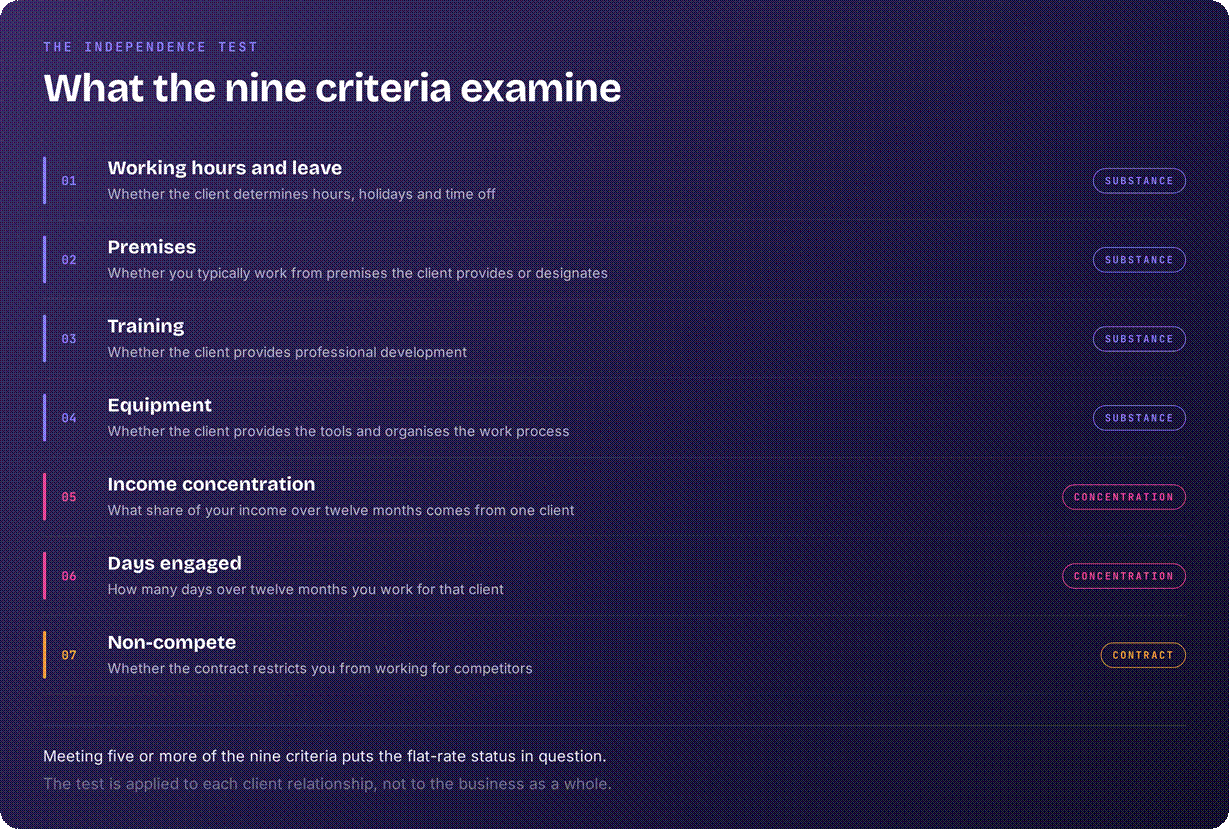
Meeting five of the nine puts the status in question.
Your residency status is the first step
You are Serbian tax resident by having a domicile or centre of business and vital interests in Serbia, or by spending 183 days or more in a twelve-month period beginning or ending in the tax year. Residents are taxed on worldwide income; non-residents on Serbian-source income.
Registration as an entrepreneur is a separate act from establishing residence, and is handled through the business registers agency with the tax administration notified automatically.
Maintain accurate records of:
• Days present in Serbia across the relevant twelve-month periods;
• Cumulative invoiced turnover through the calendar year;
• The share of your income coming from any single client;
• Days worked for each client across rolling twelve-month periods;
• Who provides your premises, equipment and training; and
• The terms of each client contract, including any non-compete.
How the flat-rate regime works
You elect the method when registering as a sole trader, and the tax administration issues a decision setting the obligation. For 2026 those decisions began arriving in electronic mailboxes in January, with the first monthly instalment due in February.
The monthly figure combines the income tax element with mandatory contributions. This article covers the tax side; the contribution component follows its own rules and should be checked separately.
Feature | Position |
Annual turnover ceiling | RSD 6,000,000, roughly EUR 50,000 |
Exceeding it mid-year | Benefit lost for the rest of the calendar year |
Base increase cap | 10% a year, extended to the end of 2027 |
Decision | Issued annually by the tax administration |
Payment | Fixed monthly instalments, regardless of invoicing |
Alternative method | Self-taxation with full bookkeeping |
Changing method | By application before 31 October for the following year |
Ceasing activity | Notify and file within 30 days |
The 10% cap on base growth is more valuable than it sounds. Before it existed, a freelancer’s fixed monthly bill could jump sharply from one January to the next if average wages in their city rose or their activity code was reassessed — which undermined the predictability that was the regime’s main attraction.
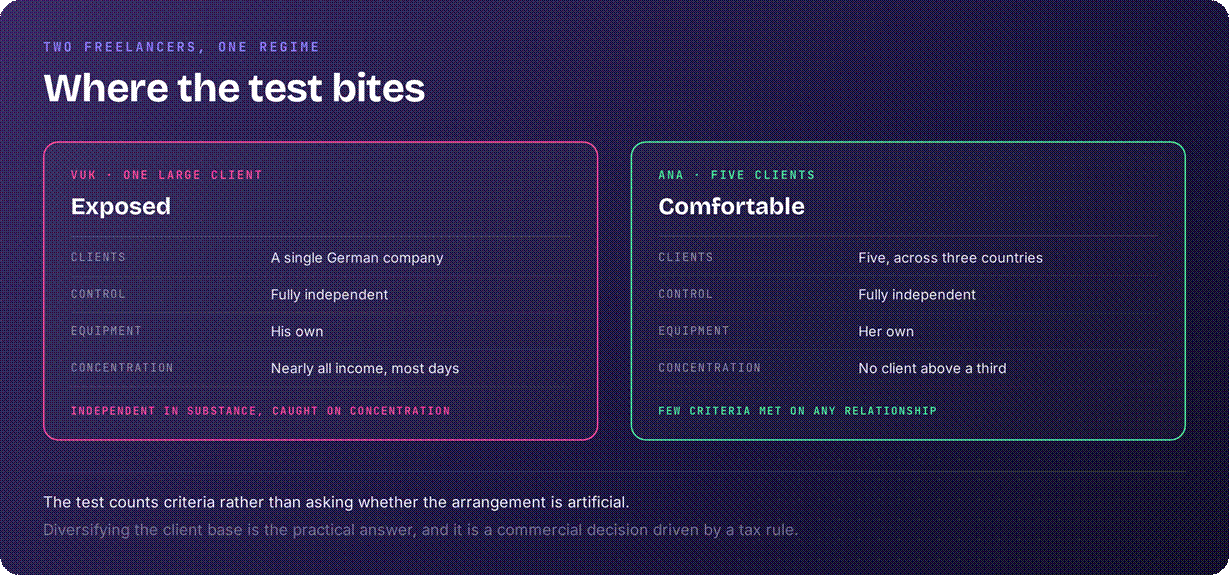
Independent in substance, exposed on concentration.
The independence test
The test applies nine criteria to the relationship between the entrepreneur and the client paying them. Meeting five or more puts the flat-rate status in question and risks the relationship being reclassified as employment, with the client treated as the employer.
The criteria examine the substance of the arrangement rather than its label, looking at questions such as:
• Who determines working hours, holidays and leave;
• Whether the entrepreneur typically works from premises provided or designated by the client;
• Whether the client provides professional training;
• Whether the client provides the equipment and organises the work process;
• How much of the entrepreneur’s income over a twelve-month period comes from a single client;
• How many days over a twelve-month period are worked for that client; and
• Whether the contract restricts the entrepreneur from working for competitors.
The concentration criteria are the ones that catch genuine freelancers rather than disguised employees. Someone with one large, long-running client can meet several criteria without any intention of avoiding payroll, which is why the test needs assessing against each client relationship rather than against the business as a whole.
Case study: Vuk and one very good client
Vuk registers as a paušal entrepreneur and picks up a single contract with a German software company that fills his year comfortably. He works his own hours from his own flat on his own laptop, and nobody at the client manages him.
On the substance criteria he is clearly independent. On the concentration criteria — the proportion of income from one client, and the number of days worked for them over twelve months — he is exposed, and he may not need many more to reach five.
Nothing about his arrangement is artificial. The test does not ask whether it is artificial; it counts criteria. Diversifying the client base is the practical answer, and it is a commercial decision driven by a tax rule.
Rates outside the regime
Serbian salary income is taxed at 10%, with a non-taxable monthly allowance. An annual income tax applies on top for individuals whose total income exceeds a multiple of the average annual salary, charged at 10% and 15% on bands above that threshold.
For an entrepreneur choosing self-taxation with bookkeeping instead of the flat rate, tax is charged on actual profit rather than on an assumed base, which suits a business with substantial deductible costs.
Filing and the compliance calendar
The tax year follows the calendar year. Flat-rate entrepreneurs pay monthly against the annual decision rather than filing periodic returns on turnover. Changing taxation method requires an application through the electronic portal before 31 October for the following year, and terminating a sole proprietorship requires notification and a return within 30 days.
Prepare in good time:
• Access to the electronic tax portal;
• The annual decision setting your monthly obligation;
• A running total of invoiced turnover against the ceiling;
• An independence test assessment for each client;
• Contracts evidencing the substance of each relationship; and
• Records supporting any change of taxation method.
Watch the ceiling and the concentration
Model your position before registering, considering:
• Whether your expected turnover leaves headroom below RSD 6,000,000;
• What happens to a large invoice arriving late in the calendar year;
• How many independence criteria each client relationship meets;
• Whether diversifying clients is commercially realistic;
• Whether self-taxation would suit a cost-heavy business better;
• Whether the 31 October deadline affects a planned change; and
• How the contribution element compares across the two methods.
Your Serbia checklist
1. Check expected turnover against the RSD 6,000,000 ceiling;
2. Watch for large invoices landing late in the calendar year;
3. Run the independence test against each client separately;
4. Note that concentration criteria catch genuine freelancers too;
5. Keep contracts that evidence your control over hours and method;
6. Avoid non-compete clauses where commercially possible;
7. Consider diversifying the client base before the test bites;
8. Compare flat rate against self-taxation if your costs are substantial;
9. Diarise 31 October if you may change method; and
10. Take separate advice on the contribution element.
Frequently asked questions
What is the paušal regime?
A flat-rate arrangement for registered sole traders. The tax administration issues an annual decision setting a fixed monthly obligation, which you pay regardless of what you actually invoice in any given month.
What is the turnover ceiling?
RSD 6,000,000 a year, roughly EUR 50,000. Exceed it during the year and the benefit is lost for the remainder of that calendar year, with no warning and no grace period.
What is the independence test?
A nine-criteria test in force since 1 March 2020, examining the relationship between an entrepreneur and the client paying them. Meeting five or more criteria puts the flat-rate status in question and risks reclassification as employment.
Can a genuine freelancer fail the test?
Yes. The concentration criteria — the share of income from one client and the number of days worked for them — can be met by someone entirely independent in substance. The test counts criteria rather than assessing intent.
How is the monthly amount calculated?
By reference to factors including your activity code, location and age. The annual increase in the taxable base used for that calculation is capped at 10%, a limit extended to the end of 2027.
Can I change taxation method?
Yes, by application through the electronic portal before 31 October for the following year. The alternative is self-taxation with full bookkeeping, taxed on actual profit, which suits businesses with substantial deductible costs.
When am I Serbian tax resident?
By having a domicile or centre of business and vital interests in Serbia, or by spending 183 days or more in a twelve-month period beginning or ending in the tax year. Residents are taxed on worldwide income.
Does the monthly bill include contributions?
Yes, the figure combines the income tax element with mandatory contributions. Only the tax side is covered here; the contribution component follows its own rules and should be checked separately.
Official sources and further reading
Important information
This article is general information and does not constitute tax, legal, immigration or financial advice, and does not create a client relationship. Tax outcomes depend on travel history, income sources, treaty status and the law applying to the relevant year. Rates, thresholds and regimes change, and some measures described may be proposed rather than enacted; this article reflects our understanding as at the date of publication. Obtain advice from a suitably qualified professional before acting or refraining from action.
