
The Solomon Islands taxes only income sourced within the country — for residents and non-residents alike. Foreign income is outside the charge entirely, and there is no capital gains tax.
The Solomon Islands operates a territorial, source-based system under the Income Tax Act (Cap. 123). Both residents and non-residents are taxed only on income sourced within the Solomon Islands, and foreign-sourced income is not taxed at all.
That places it alongside Guatemala, Panama and Costa Rica rather than with the worldwide systems that dominate the Pacific. For someone earning from abroad it is the single most consequential fact about the jurisdiction.
There is also no capital gains tax. The Income Tax Act contains no explicit capital gains provisions, though gains realised in the ordinary course of business may be treated as trading receipts and taxed accordingly.
Two details most guides miss. Payment of income outside the Solomon Islands does not negate the liability to tax — all income from employment or from services rendered in the country is subject to PAYE regardless of where it is paid. And the personal exemption is reduced pro rata where the individual carries on business or is employed in the country for only part of the year.
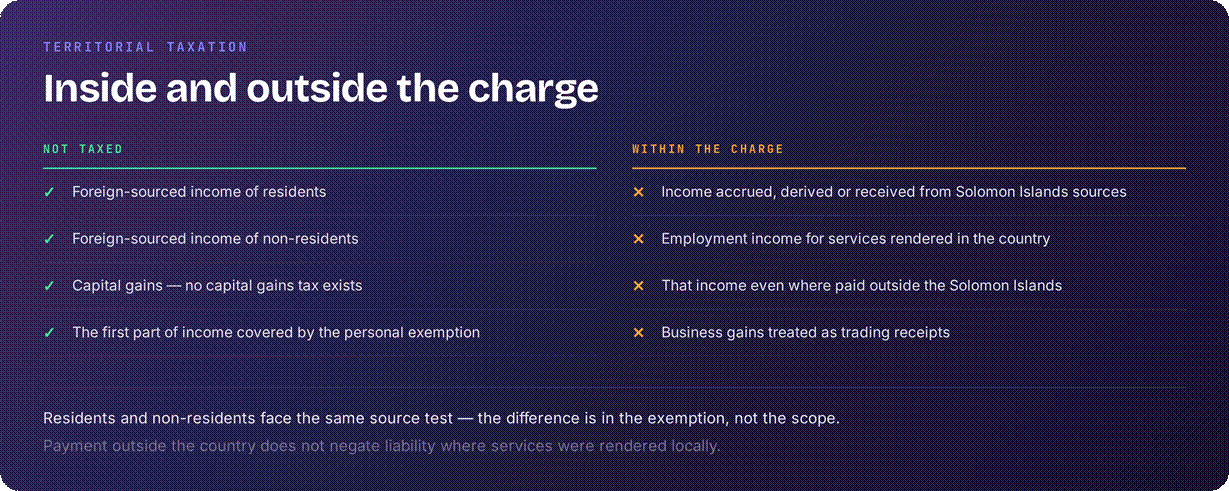
What the territorial rule covers, and what it does not.
Source, not residence, is the question
Because the system is territorial for everybody, the usual residence analysis carries much less weight than elsewhere. What matters is whether income is sourced within the Solomon Islands.
The Act is explicit on one point that catches people. All income from employment or from services rendered in the Solomon Islands is subject to Pay As You Earn tax, and the fact that it is paid outside the country makes no difference. A foreign employer paying into a foreign account does not put the income outside the charge if the services were rendered locally.
Non-resident individuals are liable for tax on income accrued, derived or received from sources in the Solomon Islands — which is the same test residents face.
Maintain accurate records of:
• Where services were physically rendered;
• The source of each item of income;
• Whether employment relates to Solomon Islands services;
• The part of the year in which you carried on business or were employed;
• Total income, for the withholding final-tax threshold; and
• Foreign income, kept separate and outside the charge.
The tax rates
Item | Position |
Foreign-sourced income | Not taxed, for residents or non-residents |
Capital gains tax | None |
Personal exemption | Raised to just over SBD 15,000 |
Exemption where part-year | Reduced proportionately |
Entry rate on the balance | 11% |
Middle rates | 23% and 35% |
Top rate | 40% |
Corporate income tax | Around 30% |
The band thresholds differ between published sources, with an older 11%, 23%, 35% and 40% scale sitting alongside a more recent restructuring. The exemption itself was raised from just under SBD 8,000 to just over SBD 15,000 after remaining unchanged for more than a decade. Confirm the current scale with the Inland Revenue Division before relying on any figure.
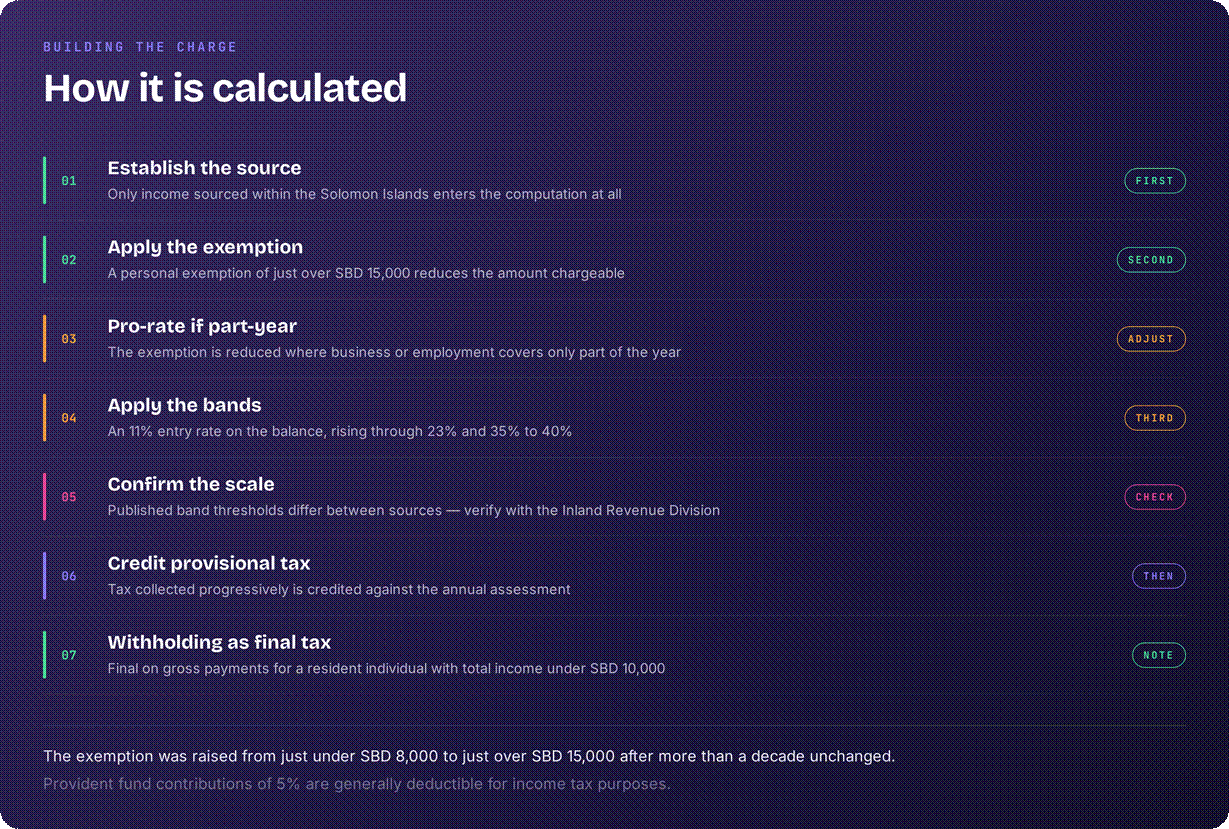
How the charge is built, step by step.
What makes the Solomon Islands attractive
The territorial rule does most of the work, but it is not alone:
• Territorial taxation applying to residents and non-residents alike, so foreign income is genuinely outside the charge;
• No capital gains tax, with the Act containing no capital gains provisions;
• A personal exemption of just over SBD 15,000, recently raised after more than a decade unchanged;
• An 11% entry rate on the balance above that exemption;
• Withholding on gross payments operating as a final tax for a resident individual whose total income is under SBD 10,000;
• Mandatory Solomon Islands National Provident Fund contributions deductible for income tax; and
• Investment incentives including tax holidays and duty exemptions under the Investment Act, depending on sector and scale.
The honest qualifications are that the top rate of 40% arrives at a low level of income by international standards, that the band structure needs confirming at source, and that banking, connectivity and professional infrastructure are limited — practical constraints that the tax position does not address.
Case study: Elena works from Honiara
Elena moves to Honiara and continues working remotely for an Australian company, paid into an Australian account. She assumes the territorial rule puts her salary outside the Solomon Islands charge.
It does not, and the Act says so directly: payment of income outside the Solomon Islands does not negate the liability to tax, and all income from employment or services rendered in the country is subject to PAYE. Her services are rendered in Honiara, so her salary is Solomon Islands-sourced.
What is outside the charge is her investment portfolio in Australia, her rental property there, and anything else genuinely sourced abroad. The territorial rule is real — it simply does not cover work she physically performs in the country.
Filing and the compliance calendar
Collection is based on an assessment system, with tax collected progressively through the year and allowed as a credit against the tax charged in the annual assessment. PAYE amounts withheld are remitted to the Inland Revenue Division of the Ministry of Finance and Treasury monthly.
Employers provide annual tax certificates summarising gross earnings, PAYE withheld and provident fund contributions, which employees need where they must file individually.
Withholding on gross payments made to residents is, notably, the final tax on those payments for a resident individual whose total income including them is less than SBD 10,000 in the year, and for a resident body of persons other than a company.
Prepare in good time:
• Registration with the Inland Revenue Division;
• Records establishing the source of each receipt;
• Evidence of where services were physically performed;
• Your annual tax certificate from the employer;
• Dates on which business or employment began and ended, for the pro-rated exemption; and
• Confirmation of the current band structure from the IRD.
Establish source before anything else
Consider:
• That the system is territorial for residents and non-residents alike;
• That services rendered in the country are locally sourced however they are paid;
• That genuinely foreign-sourced income is outside the charge;
• That there is no capital gains tax;
• That the exemption is pro-rated for a part year;
• That the band structure should be confirmed with the IRD; and
• The practical infrastructure alongside the tax position.
Your Soloman Islands checklist
1. Establish the source of every item of income;
2. Record where each service was physically rendered;
3. Do not assume foreign payment puts income outside the charge;
4. Keep genuinely foreign-sourced income separate;
5. Note there is no capital gains tax;
6. Pro-rate the exemption if you arrive or leave mid-year;
7. Confirm the current band structure with the IRD;
8. Deduct provident fund contributions;
9. Check whether withholding is final for your income level; and
10. Obtain your annual tax certificate from your employer.
Frequently asked questions
Is the Solomon Islands territorial?
Yes. Under the Income Tax Act (Cap. 123) both residents and non-residents are taxed only on income sourced within the Solomon Islands, and foreign-sourced income is not taxed at all.
Is there capital gains tax?
No. The Income Tax Act contains no explicit capital gains provisions, though gains realised in the ordinary course of business may be treated as trading receipts and taxed accordingly.
I work remotely from Honiara for a foreign employer. Am I taxed?
Yes, on that salary. Payment of income outside the Solomon Islands does not negate the liability to tax, and all income from employment or services rendered in the country is subject to PAYE. Your genuinely foreign-sourced income remains outside the charge.
What is the personal exemption?
Just over SBD 15,000, raised from just under SBD 8,000 after remaining unchanged for more than a decade. It is reduced proportionately where the individual carries on business or is employed in the country for only part of the year.
What are the rates?
An entry rate of 11% on the balance above the exemption, rising through 23% and 35% to a top rate of 40%. Published band thresholds differ between sources, so the current scale should be confirmed with the Inland Revenue Division.
Does residence matter?
Less than in most systems, because the source test is the same for residents and non-residents. What residence affects is entitlement to the exemption and the administration, not the scope of the charge.
When is withholding a final tax?
Withholding on gross payments made to residents is the final tax on those payments for a resident body of persons other than a company, and for a resident individual whose total income including those payments is less than SBD 10,000 in the year.
Are there investment incentives?
Tax holidays and duty exemptions may be available under the Investment Act, with the specific terms depending on the sector and scale of the investment.
Official sources and further reading
• Inland Revenue Division, Solomon Islands
Important information
This article is general information and does not constitute tax, legal, immigration or financial advice, and does not create a client relationship. Tax outcomes depend on travel history, income sources, treaty status and the law applying to the relevant year. Rates, thresholds and regimes change, and some measures described may be proposed rather than enacted; this article reflects our understanding as at the date of publication. Obtain advice from a suitably qualified professional before acting or refraining from action.
