
Korea gives foreign employees a flat rate election that now runs for twenty years, and a five-year window in which foreign income is only taxed if you bring it in. The second is rarely described for what it is.
Korea has two features that matter to anyone arriving with income from elsewhere, and they operate independently. One is a flat rate election on employment income. The other is a rule limiting what Korea taxes at all during your first years in the country.
The second is effectively a remittance basis, though almost nobody calls it one. A foreign resident who has been in Korea for five years or less within the last ten is taxed on Korean-source income, plus foreign-source income only to the extent it is paid in Korea or remitted into a Korean bank account. Foreign income left abroad sits outside the charge.
Once you pass the five-year threshold, that protection ends and worldwide taxation applies in full.
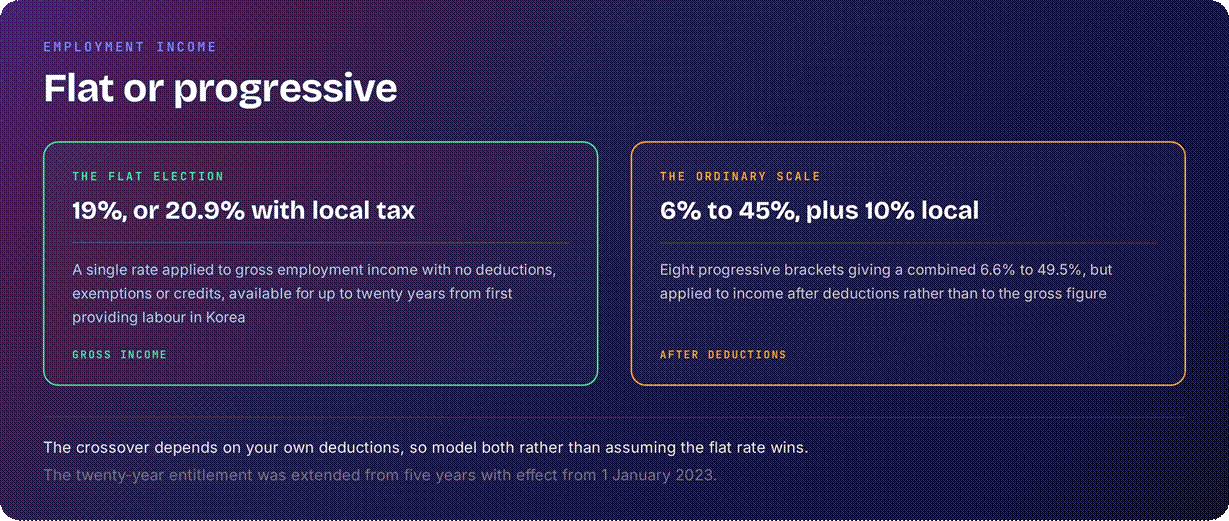
Two elections, two very different bases.
Your residency status is the first step
You are a Korean tax resident if you have a domicile in Korea or have resided there for 183 days or more. Residents are taxed on worldwide income, subject to the five-year rule below; non-residents on Korean-source income only.
The five-of-ten-years count is what decides your scope as a foreign resident, so it needs tracking from the first arrival rather than reconstructed later.
Maintain accurate records of:
• The date you first provided labour in Korea, which starts the twenty-year clock;
• Cumulative years of Korean residence across the last ten;
• Every remittance of foreign income into a Korean account;
• Whether employment income is paid by a Korean or a foreign entity;
• Days present in Korea in each calendar year; and
• Any other country that may also treat you as resident.
The five-year rule, and what it shelters
Position | What Korea taxes |
Non-resident | Korean-source income only |
Foreign resident, five years or less in the last ten | Korean-source income, plus foreign income paid or remitted into Korea |
Foreign resident, more than five years | Worldwide income |
Foreign income kept abroad, within the window | Outside the charge |
Foreign income remitted into Korea, within the window | Taxable |
Korean employment income | Taxable throughout |
This is the planning window and it is easy to waste. Someone in their first years in Korea who routinely sweeps foreign dividends into a Korean account is bringing income into charge that would otherwise sit outside it entirely. The decision is operational — which account the money lands in — rather than structural.
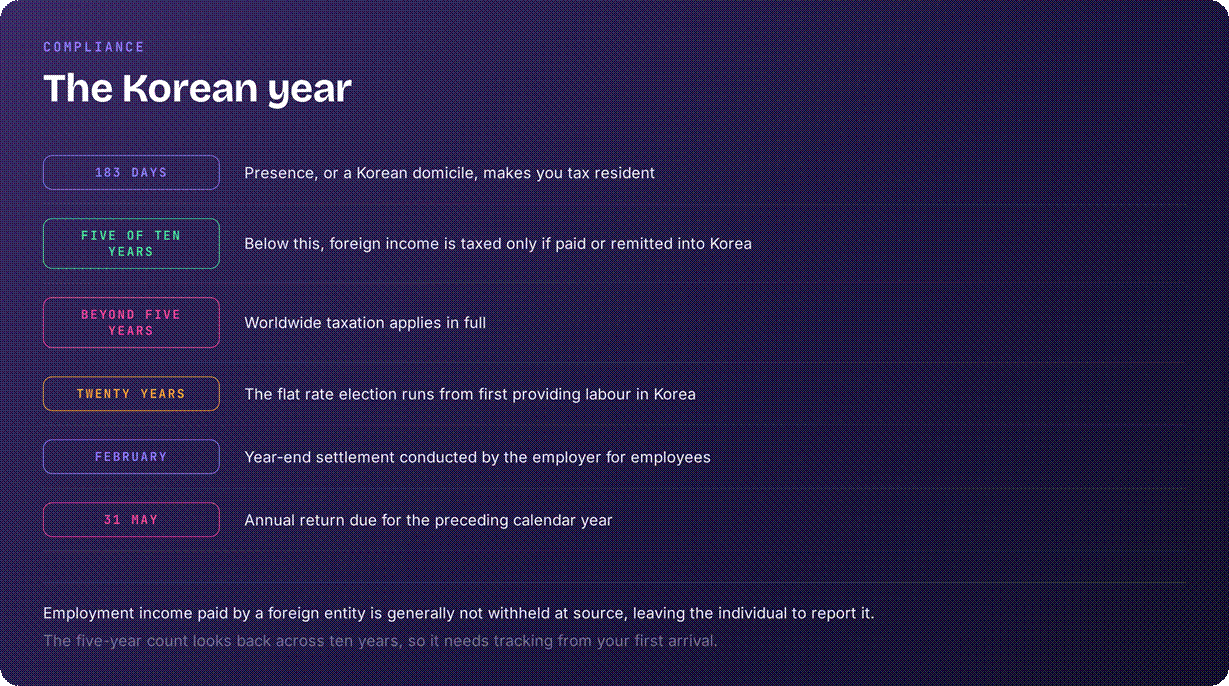
The dates and deadlines that govern the position.
The flat rate election
Foreign employees may elect a flat 19% on gross employment income in place of the progressive rates. With the 10% local income tax the combined figure is 20.9%.
The election applies to gross income, so no deductions, exemptions or credits are available alongside it. That is what makes the comparison non-obvious: the progressive scale starts at 6.6% combined and only reaches 20.9% part-way up, but it operates on income after deductions rather than before.
The crossover point therefore depends on your own deductions rather than on a universal figure, and it should be modelled both ways each year rather than decided once. The election is available for up to twenty years from the date the foreign national first provided labour in Korea, extended from five years with effect from 1 January 2023.
Class A and Class B income
Korean practice distinguishes employment income paid by a local entity and recognised in its accounts (informally Class A) from employment income paid by a foreign entity and recorded in the foreign entity’s accounts (Class B).
The distinction matters administratively. Class A income is generally subject to Korean withholding through the payroll; Class B income typically is not, which leaves the individual responsible for reporting and paying. Someone employed by a foreign entity while working in Korea can therefore have a real Korean liability with nothing collected at source.
Case study: Elena sweeps the wrong account
Elena moves to Seoul in her first year in Korea, holding a European share portfolio producing dividends and interest. She sets up a standing instruction moving the income into her Korean account each quarter, because it is convenient.
Within the five-year window, foreign income is taxable only to the extent it is paid in Korea or remitted there. By sweeping it automatically, she brings the whole amount into the Korean charge when leaving it in her European account would have kept it out.
Nothing about her portfolio or her intentions changed the outcome. The banking instruction did, and it was set up before anyone explained the rule to her.
Rates and the compliance calendar
The progressive scale runs from 6% to 45% across eight brackets, with a 10% local income tax applied on top of the national tax, giving a combined range of 6.6% to 49.5%. The top bracket applies above KRW 1 billion.
The tax year follows the calendar year. Employees generally settle through a year-end settlement conducted by the employer early in the following year, and the annual return for those who must file is due by 31 May. The National Tax Service administers the system.
Model both elections, every year
Consider before you arrive, and again each year:
• How many of the last ten years you have been resident in Korea;
• Whether foreign income can stay abroad during the window;
• Which account your foreign income currently lands in;
• Whether the flat rate beats the progressive scale on your deductions;
• When your twenty-year flat rate entitlement began;
• Whether your employment income is Class A or Class B for withholding; and
• What happens in year six, when worldwide taxation begins.
Your Korea checklist
1. Count your years of Korean residence across the last ten;
2. Record the date you first provided labour in Korea;
3. Decide which account foreign income should land in during the window;
4. Avoid standing instructions that sweep foreign income into Korea;
5. Model the flat election against the progressive scale on your deductions;
6. Re-run that comparison annually rather than deciding once;
7. Establish whether your employment income is Class A or Class B;
8. Budget for the 10% local income tax on top of the national figure;
9. Diarise the 31 May filing deadline; and
10. Plan for year six before you reach it.
Frequently asked questions
Does Korea tax my foreign income?
It depends on how long you have been there. A foreign resident who has been in Korea for five years or less within the last ten is taxed on Korean-source income plus foreign income paid in or remitted into Korea. Beyond five years, worldwide income is taxable.
Is that a remittance basis?
In substance, yes, though it is rarely described that way. Foreign income kept outside Korea during the window sits outside the charge, which makes the choice of receiving account a genuine planning decision.
What is the flat rate for foreign employees?
19% on gross employment income, or 20.9% including the 10% local income tax, elected in place of the progressive rates. No deductions, exemptions or credits are available alongside it.
How long does the flat rate election last?
Up to twenty years from the date the foreign national first provided labour in Korea, extended from five years with effect from 1 January 2023.
Is the flat rate always better?
No. It applies to gross income while the progressive scale applies after deductions, so the crossover depends on your own circumstances. It should be modelled both ways each year rather than settled once.
What are Class A and Class B income?
Employment income paid by a local entity and recognised in its accounts is informally Class A; income paid by a foreign entity and recorded in that entity’s accounts is Class B. Class B is generally not withheld at source, leaving the individual to report and pay.
What is the real top rate?
49.5% — the 45% national top bracket plus the 10% local income tax calculated on the national tax. Guidance quoting 45% alone understates the position.
When do I file?
The tax year follows the calendar year. Employees generally settle through an employer-conducted year-end settlement early in the following year, and the annual return for those required to file is due by 31 May.
Official sources and further reading
• National Tax Service of Korea
Important information
This article is general information and does not constitute tax, legal, immigration or financial advice, and does not create a client relationship. Tax outcomes depend on travel history, income sources, treaty status and the law applying to the relevant year. Rates, thresholds and regimes change, and some measures described may be proposed rather than enacted; this article reflects our understanding as at the date of publication. Obtain advice from a suitably qualified professional before acting or refraining from action.
