
Two things are usually said about Sweden, and both are true: residents are taxed on worldwide income at rates among the highest in Europe, and qualifying international employees can have a quarter of their pay taken out of the Swedish charge entirely.
This guide covers how Swedish residency is triggered, what the rates actually are once you account for both layers, how the expert tax relief works and what it is worth, how capital gains are treated, and what happens to your Swedish exposure when you leave.
What makes you tax resident
Sweden has three routes into residence, and only one of them is a day count:
• A habitual abode in Sweden — broadly, a continuous stay of six months, where ad hoc holidays abroad do not generally interrupt the period;
• A permanent home in Sweden; or
• Essential connection to Sweden, which applies to people who have previously lived there and retain meaningful ties.
Essential connection is the one that keeps people in the system. Swedish citizens, and anyone who has been resident in Sweden for at least ten years, face a presumption of continued essential connection for five years from the date of departure — and the burden is on them to disprove it. A retained home or a shareholding of ten per cent or more weighs heavily in that assessment.
If you are a foreign citizen who has never lived in Sweden, essential connection is not the relevant ground. Residence or habitual stay is what determines your liability.
Case study: Sarah's six-month stay
Sarah relocates from Canada to Sweden for an employment assignment and remains for six consecutive months, taking several short holidays abroad.
The holidays are unlikely to break the period, because they are ad hoc absences. She may therefore become Swedish tax resident and need to consider her worldwide income, not just her Swedish salary. She should review her Canadian position, check the treaty, and prepare for Swedish reporting before the calendar year ends.
What Swedish tax actually costs
A single headline percentage does not describe Sweden, because earned income and capital income are taxed under separate systems.
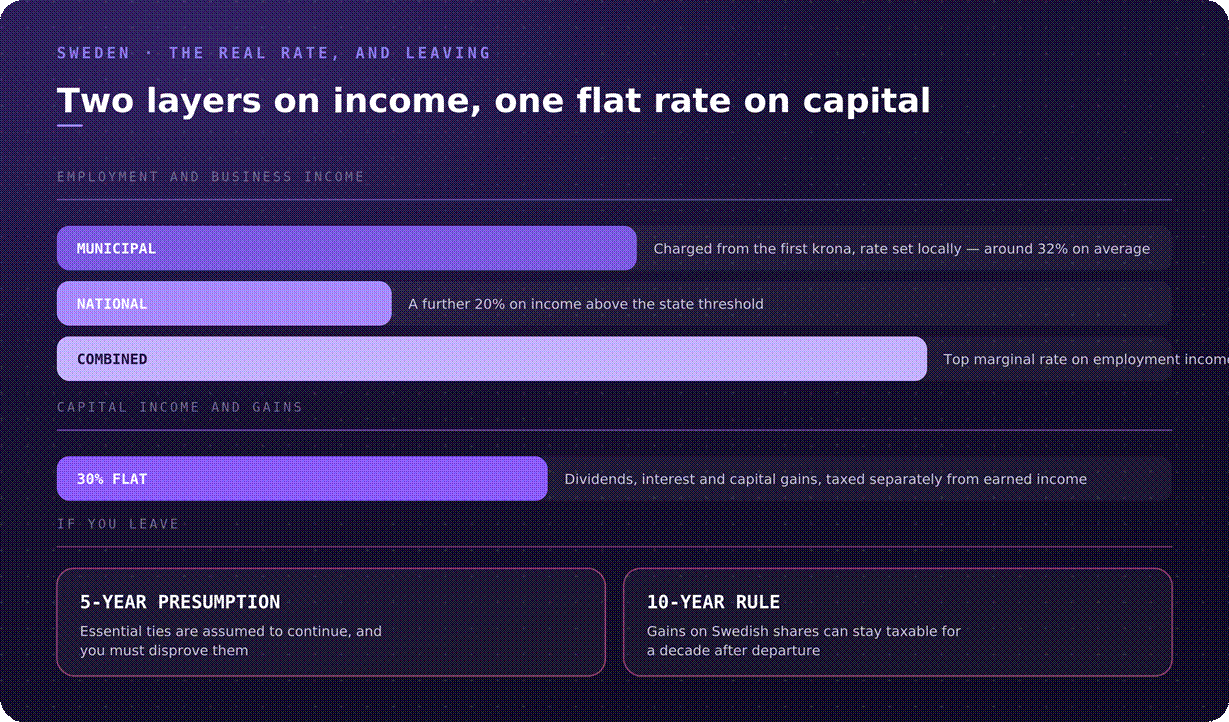
Two layers on earned income, one flat rate on capital, and two rules that follow you out.
Employment and business income are subject to municipal tax from the first krona, at a rate set by your municipality and averaging around 32%. A further national income tax of 20% applies to income above the state threshold, which is indexed annually. Taken together, the top marginal rate on employment income sits in the low fifties — considerably above any 32% figure quoted alone.
Capital income is different. Dividends, interest and capital gains are taxed separately at a flat rate of 30%, rather than being added to earned income.
Income type | Swedish treatment for a resident |
Employment income | Municipal tax from the first krona, plus national tax above the state threshold |
Business income | Taxed as earned income, at the ordinary rates |
Dividends, interest and capital gains | A separate flat rate on capital income |
Investment savings account holdings | A notional yearly charge rather than tax on actual gains |
Qualifying expert remuneration | A quarter exempt from income tax and employer contributions |
Gains on Swedish shares after leaving | Can remain taxable for up to ten years |
Worth knowing if you invest. Sweden offers an investment savings account, the investeringssparkonto or ISK, which is taxed on a notional yearly basis rather than on realised gains. For many portfolios the effective rate works out below the standard 30% on capital, and there is no need to compute gains on each disposal. It is a genuinely different treatment, not a wrapper around the same rules.
The expert tax relief
This is the single most valuable thing an incoming professional should know about, and it is frequently missed because it is administered by a body most people have never heard of.
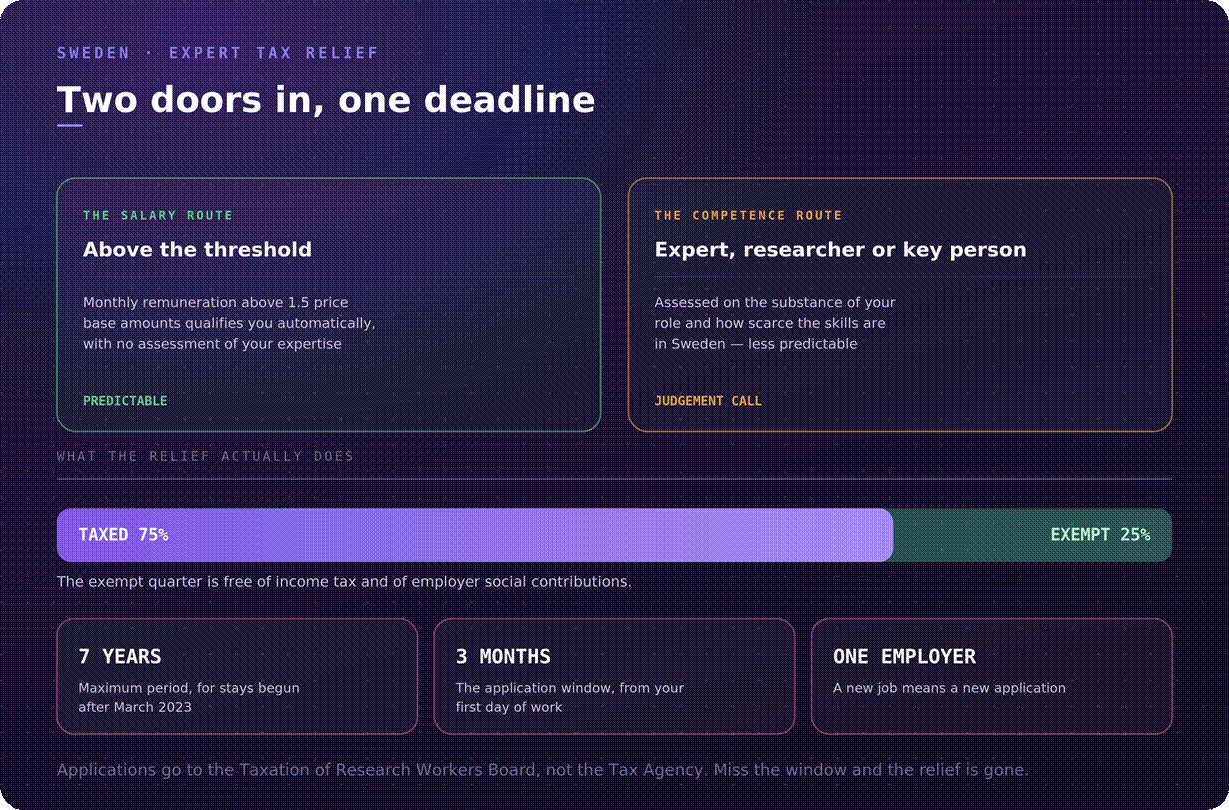
Two routes in, a seven-year period, and a three-month window.
Where the relief is granted, 25% of your remuneration is exempt from Swedish income tax. The remaining 75% is taxed under the ordinary rules. Because the exempt quarter comes off before both municipal and national tax, the saving on a high salary is substantial.
Two routes to qualify
The salary route is the predictable one. If your monthly remuneration exceeds 1.5 times the Swedish price base amount for the year your Swedish job starts, you qualify on the figure alone, with no assessment of your expertise. The threshold is indexed each year and has sat a little under SEK 90,000 a month in recent years.
A threshold figure worth checking. The multiple was reduced from two price base amounts to 1.5 with effect from 2025, which lowered the monthly figure considerably. Older guidance quoting around SEK 114,600 reflects the previous rule and the earlier year — use the current figure for the year your employment starts.
The competence route covers experts, researchers and key people whose skills are scarce in Sweden. It requires a substantive assessment and outcomes are less predictable, which is why the salary route is preferable where both are available.
How long it lasts
The relief runs for up to seven years from the start of your stay, for stays beginning after 31 March 2023. Earlier arrivals may be limited to five years, or three under older rules, unless a specific extension was granted within the applicable window.
The three-month window is the critical step
The application must be filed with the Taxation of Research Workers Board — Forskarskattenämnden — within three months of the day you start work in Sweden. It does not go to the Tax Agency, and it cannot generally be claimed for the first time through your annual return.
Do not assume payroll will handle it. Either you or your employer can apply, but you remain responsible for confirming that the application was actually made, on time and accurately. Applications outside the window are not accepted, and missing it can cost seven years of relief.
Other conditions apply: you must work for an employer based in Sweden or with a Swedish permanent establishment, you must not intend to stay in Sweden for more than seven years, and you must be taxed under the ordinary rules rather than the special non-resident regime. If you change employer, you need a fresh application — the grant is tied to the employer named in the decision.
Where relief is granted, certain employer-borne costs can also be paid free of tax, including relocation expenses, school fees for children and two home trips a year for the family.
Case study: Mark's missed deadline
Mark signs a Swedish contract with a monthly salary comfortably above the threshold, assumes payroll will apply the exemption automatically, and submits his application four months after relocating.
He meets the income requirement, but the application falls outside the three-month window. The relief may be lost for the entire period. Arrange the application before or immediately after the move, confirm who is submitting it, and obtain evidence of the submission date.
Changes have been proposed
A government inquiry has proposed raising the exemption from 25% to 30%, narrowing the competence route to research and development roles, moving the salary threshold to an income base amount measure, and converting the seven-year period into a lifetime allowance. These remain proposals — confirm what is actually in force for the year your employment begins.
Filing and compliance
Sweden uses the calendar year. The standard individual filing deadline is 2 May, with settlement generally due after assessment and advance payments possible depending on your circumstances.
The expert relief does not remove your wider obligations. You may still need to report employment income not covered by the exemption, foreign employment or freelance income, investment and rental income, taxable benefits, income received before or after relocation, and anything subject to treaty relief or foreign tax credits. Review the return rather than assuming every item has been handled correctly through payroll.
Case study: Felicity's cross-border income
Felicity becomes Swedish tax resident while continuing to receive freelance income from clients in the United Kingdom and Germany. Her Swedish employer has obtained approval for the expert relief on her employment income.
The relief reduces the taxable portion of her qualifying Swedish employment income. It does nothing for her foreign freelance income, which needs separate analysis under the relevant treaties, source rules and foreign tax paid. She should keep employment, freelance and investment income in separate records.
If you leave Sweden
Two rules outlast your departure, and both matter for capital gains planning.
The first is the five-year presumption of essential connection described above. The second is the ten-year rule: gains on Swedish shares and securities can remain within the Swedish charge for up to ten years after you cease to be resident. It is not a classic exit tax, in that nothing is deemed realised on departure — but the taxing right is extended, so what matters is when you actually sell.
The practical consequence. If you hold Swedish securities with significant unrealised gains and plan to leave, the timing of any disposal relative to your departure — and whether a treaty limits the extended taxing right — is worth modelling before you move, not after.
Non-residents receiving Swedish-source employment income or pensions are generally taxed under a separate flat-rate regime with no deductions, at a rate that has been subject to change; confirm the current figure. Swedish dividends paid to non-residents attract withholding, which a treaty may reduce.
Notify the Tax Agency of your departure in good time, and build the evidence for severing ties in real time: a lease or deed in the new country, foreign registration, and documentation that the Swedish home has been sold.
Your checklist
1. Establish which Swedish residency trigger you are likely to meet, and when;
2. Review your worldwide income position before you arrive;
3. Check whether your employment qualifies for expert relief under either route;
4. Confirm the current salary threshold for the year your employment starts;
5. Apply to Forskarskattenämnden within three months, and get written confirmation;
6. Reapply if you change employer;
7. Model the combined municipal and national rate rather than a single figure;
8. Consider an investment savings account for portfolio holdings;
9. Review the treaty position for any foreign income;
10. Prepare for the 2 May filing deadline; and
11. If you may leave, plan around the five-year presumption and the ten-year rule on Swedish shares.
Frequently asked questions
Is the top rate of tax really 32%?
No. Around 32% is the average municipal rate, charged from the first krona. A further national income tax of 20% applies above the state threshold, so the top marginal rate on employment income is in the low fifties.
How long does the expert tax relief last?
Up to seven years for stays beginning after 31 March 2023. Earlier arrivals may be limited to five years, or three under older rules, unless an extension was specifically granted.
What is the salary threshold?
Monthly remuneration above 1.5 times the price base amount for the year your Swedish employment starts. The multiple dropped from two to 1.5 from 2025, so figures around SEK 114,600 in older articles reflect the previous rule.
When do I have to apply?
Within three months of your first day of work in Sweden, to the Taxation of Research Workers Board rather than the Tax Agency. Late applications are not accepted.
Does the relief cover bonuses and benefits?
Where granted, it applies to taxable compensation from the employer named in the decision, which can include base salary, bonuses, equity compensation and benefits in kind. Change employer and you need a new application.
How are capital gains taxed?
Capital income — dividends, interest and gains — is taxed separately at a flat 30%. An investment savings account offers an alternative notional-yield treatment that often works out lower for a long-term portfolio.
Can Sweden tax me after I leave?
It can. Essential connection is presumed for five years after departure for Swedish citizens and long-term residents, and gains on Swedish shares can remain taxable for up to ten years after you cease to be resident.
When is the filing deadline?
2 May, for the preceding calendar year, with settlement following assessment. Advance payments may apply depending on your income.
Official sources and further reading
• Skatteverket — the Swedish Tax Agency
• Forskarskattenämnden — the Taxation of Research Workers Board
Important information
This article is general information and does not constitute tax, legal, immigration or financial advice, and does not create a client relationship. Tax outcomes depend on travel history, income sources, treaty status and the law applying to the relevant year. Rates, thresholds and regimes change, and some measures described may be proposed rather than enacted; this article reflects our understanding as at the date of publication. Obtain advice from a suitably qualified professional before acting or refraining from action.
