
Tajikistan taxes employment at the main place of work at 12% after a personal deduction. Everything else is taxed at 15% with no deductions at all, which makes the category more important than the rate.
Tajikistan looks like a flat-tax country and is not quite one. Taxable income of a resident at the main place of work, in excess of the personal deduction, is taxed at 12%. That is the figure usually quoted.
What follows is the part that gets left out. Other taxable income is taxed at 15% without deductions. No personal allowance, no expense relief — the gross amount at 15%.
So the gap between the two treatments is wider than three percentage points suggests. One is 12% after a deduction; the other is 15% on everything.
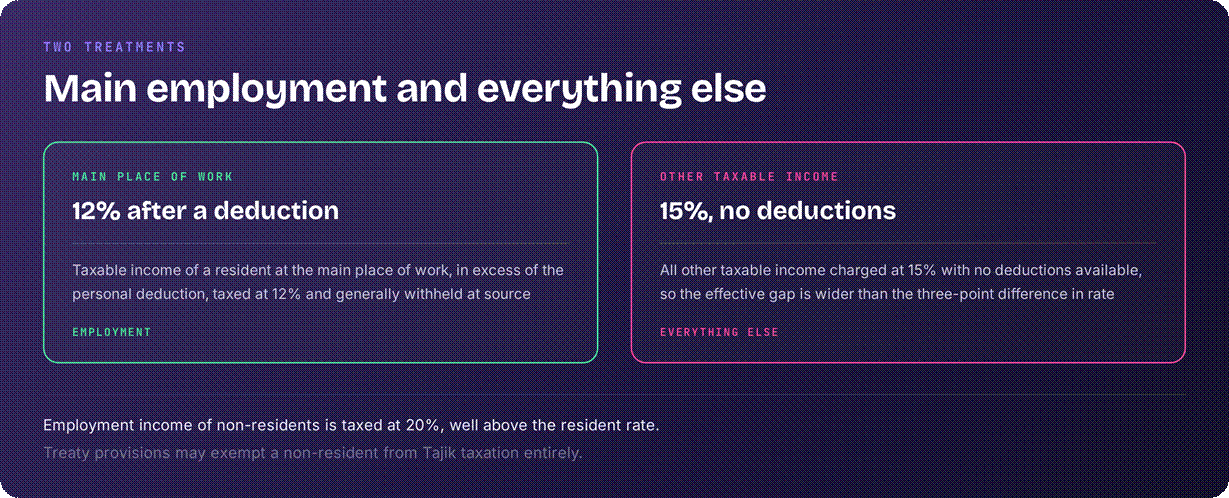
Two categories, and the gap is wider than it looks.
Your residency status is the first step
Non-resident individuals are taxed on their Tajikistan-source income, administered primarily through withholding, though in certain limited instances a non-resident is required to self-assess.
Under certain conditions, or where the provisions of a double taxation treaty are available, non-resident individuals may be exempt from taxation in Tajikistan. That is worth establishing before assuming the 20% applies.
The resident and non-resident employment rates diverge sharply — 12% against 20% — so the residence position is materially consequential here.
Maintain accurate records of:
• Days present in Tajikistan during the tax year;
• Which employment is your main place of work;
• Income falling outside main-place-of-work employment;
• Gross annual income, for the simplified system threshold;
• A treaty residence certificate, if claiming exemption; and
• Any other country that may also treat you as resident.
The tax rates
Item | Rate |
Resident employment at the main place of work | 12% above the personal deduction |
Other taxable income | 15%, with no deductions |
Non-resident employment income | 20% |
Non-resident other income | Primarily by withholding |
Treaty relief | May exempt a non-resident entirely |
Simplified system threshold | Gross annual income up to TJS 1 million |
Personal deduction | Applies to main-place-of-work employment only |
Social tax | Applies separately to the insured person |
The phrase "main place of work" is doing real work in that table. Employment income earned elsewhere — a second job, consultancy alongside a salary — falls into the 15% category rather than the 12% one, and loses the personal deduction with it.
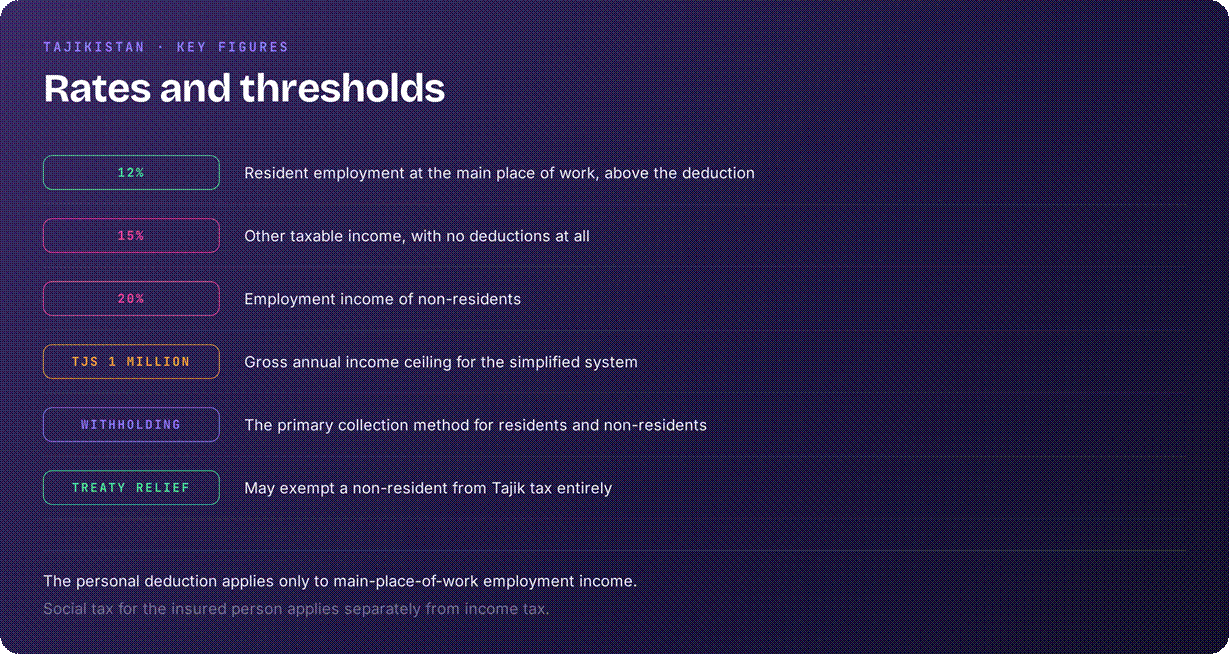
The dates and thresholds that govern the position.
What makes Tajikistan attractive
The case is narrower than the headline rate suggests but real:
• A 12% rate on main employment income, low by any standard;
• A personal deduction before that rate applies;
• A simplified tax system for individual entrepreneurs under TJS 1 million of gross annual income;
• Treaty relief that may exempt a non-resident from Tajik tax entirely;
• Collection primarily through withholding, so most people have little to administer; and
• A low cost of living.
The honest qualifications are substantial. The 15% on other income comes with no deductions, so the effective burden on a second income stream is higher than the rate suggests. Non-resident employment at 20% is materially worse than the resident rate. And the treaty network, banking access and published guidance are all limited.
Case study: Farrukh takes a second engagement
Farrukh earns a salary at his main place of work, taxed at 12% after the personal deduction. He then takes on consultancy work alongside it.
That second income is not main-place-of-work employment, so it falls into the 15% category with no deductions. He cannot set expenses against it and he cannot apply the personal deduction a second time.
The rate difference is three points; the effective difference is larger, because the deduction and expense relief both disappear. Where income sits in the structure matters more than the headline suggests.
Filing and the compliance calendar
Taxation is administered primarily through withholding, both for residents at the main place of work and for non-residents on Tajikistan-source income. In certain limited instances non-resident individuals are required to make a self-assessment, and individual entrepreneurs within the simplified system account under its own rules.
Prepare in good time:
• Registration with the tax authority;
• Confirmation of which employment is your main place of work;
• Separate records for income outside that employment;
• Gross annual income records against the TJS 1 million threshold;
• A treaty residence certificate, if claiming exemption; and
• Self-assessment records where withholding does not apply.
Category matters more than rate
Consider:
• Which employment counts as your main place of work;
• That other income is 15% with no deductions at all;
• That the personal deduction applies once, to main employment;
• That non-resident employment is taxed at 20%;
• Whether a treaty could exempt you as a non-resident;
• Whether the simplified system fits your gross annual income; and
• That published guidance is thin, so verify with the authority.
Your Tajikistan checklist
1. Identify which employment is your main place of work;
2. Separate all other income, taxed at 15% with no deductions;
3. Do not expect expense relief against the 15% category;
4. Note the personal deduction applies only once;
5. Check whether non-resident status would mean 20%;
6. Establish whether a treaty could exempt you entirely;
7. Obtain a residence certificate if claiming treaty relief;
8. Test gross annual income against the TJS 1 million threshold;
9. Confirm whether withholding covers your position; and
10. Verify any figure with the tax authority, given thin guidance.
Frequently asked questions
What is the Tajik income tax rate?
Taxable income of a resident at the main place of work, above the personal deduction, is taxed at 12%. Other taxable income is taxed at 15% without deductions, and employment income of non-residents at 20%.
Why does "main place of work" matter?
Because only employment at the main place of work attracts the 12% rate and the personal deduction. A second job or consultancy alongside a salary falls into the 15% category with no deductions at all.
Are there deductions against other income?
No. The 15% applies without deductions, apart from the social tax for the insured person. That makes the effective gap between the two categories wider than the three-point rate difference suggests.
How are non-residents taxed?
On Tajikistan-source income, primarily through withholding, with employment income at 20%. In certain limited instances a non-resident is required to self-assess.
Can a treaty help?
Yes. Under certain conditions, or where the provisions of a double taxation treaty are available, non-resident individuals may be exempt from taxation in Tajikistan entirely. It is worth establishing before assuming the 20% applies.
What is the simplified tax system?
A regime available to individual entrepreneurs whose gross annual income does not exceed TJS 1 million, accounting under its own rules rather than the general ones.
Is Tajikistan a flat-tax country?
Not strictly. The 12% figure usually quoted applies only to main-place-of-work employment income. With 15% on other income and 20% for non-resident employment, the system has three rates rather than one.
How is tax collected?
Primarily through withholding, for residents at the main place of work and for non-residents on Tajikistan-source income, with self-assessment in limited cases and under the simplified system.
Official sources and further reading
Important information
This article is general information and does not constitute tax, legal, immigration or financial advice, and does not create a client relationship. Tax outcomes depend on travel history, income sources, treaty status and the law applying to the relevant year. Rates, thresholds and regimes change, and some measures described may be proposed rather than enacted; this article reflects our understanding as at the date of publication. Obtain advice from a suitably qualified professional before acting or refraining from action.
