
Uganda raised its tax-free threshold by more than 40% with effect from 1 July 2026. The residence rules did not change, and two of the four limbs have nothing to do with counting 183 days.
Uganda taxes residents on worldwide income and non-residents on Uganda-source income. The system is administered by the Uganda Revenue Authority, and the year of income runs 1 July to 30 June — a misalignment with the calendar year that affects both day counting and income matching.
The Income Tax (Amendment) Act 2026, passed on 23 April 2026 and in force from 1 July 2026, raised the exempt threshold from UGX 2,820,000 to UGX 4,020,000 a year — USh 335,000 a month — and revised the marginal rates above it to 20%, 25%, 30% and 40%.
That is a substantial widening of the exempt base, taking a meaningful number of lower earners out of PAYE entirely.
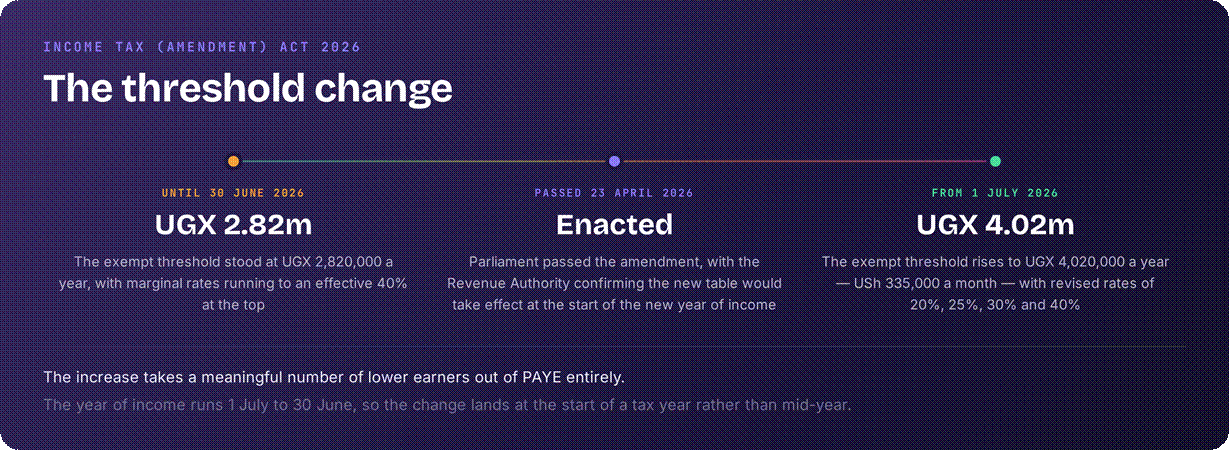
What changed on 1 July 2026, and what did not.
Your residency status is the first step
An individual is resident for a year of income if any one of the following applies:
• They have a permanent home in Uganda;
• They are present in Uganda for 183 days or more in any twelve-month period commencing or ending in the year of income;
• They are present during the year of income and in each of the two preceding years for periods averaging more than 122 days in each; or
• They are an employee or official of the government of Uganda posted abroad during the year of income.
The permanent home limb carries no day requirement at all, and the 122-day average looks backwards across three years. Someone visiting Uganda regularly for four months a year is caught by the third limb without ever approaching 183 days in a single year.
Maintain accurate records of:
• Days present by year of income, running July to June;
• Days present across rolling twelve-month periods;
• Day counts for the year and each of the two preceding years;
• Whether any Ugandan dwelling constitutes a permanent home;
• The first day you were present in Uganda, for the part-year rule; and
• Any other country that may also treat you as resident.
The tax rates
For the 2026/27 year of income, resident individuals are taxed as follows:
Item | Position from 1 July 2026 |
Exempt threshold | UGX 4,020,000 a year, or USh 335,000 a month |
Previous threshold | UGX 2,820,000 a year |
Revised marginal rates | 20%, 25%, 30% and 40% on successive bands |
Additional charge | An extra 10% historically applied above UGX 10 million a month |
Non-residents | No exempt threshold — tax from the first shilling |
Capital gains on private investments | Not taxed |
Business asset disposals | Taxed as income |
Withholding on dividends, interest and royalties | 15% |
Non-residents lose the exempt band entirely, so someone with modest Uganda-source income is usually better off resident. The comparison only shifts at higher levels, and even then it has to be set against the worldwide scope residence brings.
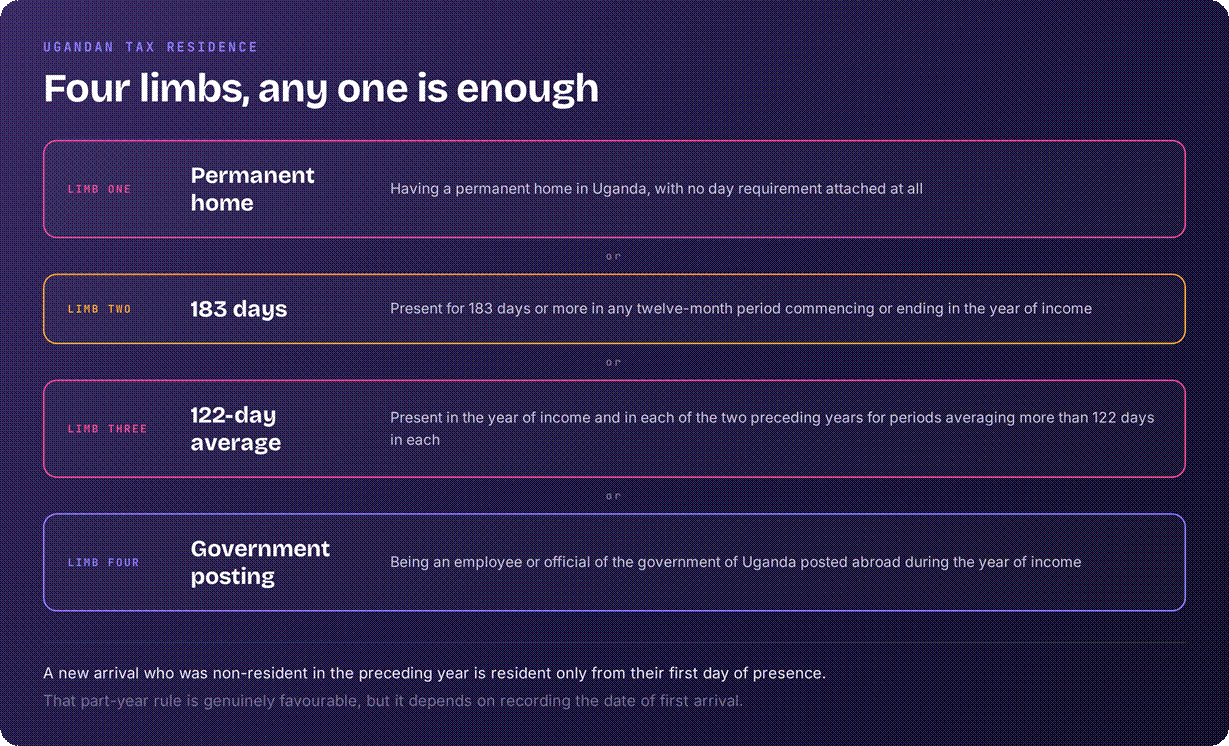
Four limbs, and two of them ignore the day count.
What makes Uganda attractive
Set against the headline top rate, several features work in a new arrival’s favour:
• The exempt threshold rose by more than 40% from July 2026, which improves the position for everyone below the higher bands;
• No capital gains tax on private investment gains, which is unusual and materially valuable for anyone holding a portfolio;
• The part-year rule means a new arrival is resident only from their first day of presence, rather than for the whole year of income;
• Employment income is collected entirely through PAYE withholding, so most employees have no return to prepare;
• Residence is reached at 183 days, with no minimum investment, property purchase or capital requirement of any kind; and
• Membership of the East African Community allows movement and work across a large regional market from a Ugandan base.
The cost of living in Kampala is low by international standards, and the combination of no capital gains tax on private investments with a rising exempt threshold makes the position considerably better than a 40% top rate suggests in isolation.
Case study: Grace arrives in November
Grace takes a role in Kampala starting in November, part way through the July-to-June year of income. She was not Ugandan resident in the preceding year.
The part-year rule means she is treated as resident only from the day she first arrived, rather than for the whole year of income. Her worldwide income before that date is outside the Ugandan charge, and only income from November onwards enters it.
Had Uganda applied residence to the full year of income, as some countries do, her position would have been materially worse. The rule is favourable and it applies automatically, but the date of first presence needs recording because everything turns on it.
Filing and the compliance calendar
The year of income runs 1 July to 30 June. Employment income is withheld monthly through PAYE and remitted by the employer, so most employees have nothing further to file. Individuals with business, rental or other income file a return with the Revenue Authority under its published timetable.
A Tax Identification Number is required, and there is a Local Service Tax collected by district authorities at a nominal annual amount. Prepare in good time:
• A TIN and access to the Revenue Authority’s portal;
• Day-count records on the July-to-June year;
• Three years of day counts for the 122-day average;
• The date of first presence in Uganda;
• PAYE records from any Ugandan employer; and
• Records of foreign income, where you are resident.
Track the year that starts in July
Consider:
• That the year of income runs July to June, not January to December;
• Whether a permanent home makes you resident with no day count;
• Whether the 122-day average catches you across three years;
• The exact date you were first present, for the part-year rule;
• That the exempt threshold rose on 1 July 2026;
• That non-residents get no exempt band at all; and
• That private investment gains are outside the charge.
Your Uganda checklist
1. Count days on the July-to-June year of income;
2. Keep three years of day counts for the 122-day average;
3. Check whether a permanent home makes you resident without a day count;
4. Record the exact date of first presence in Uganda;
5. Apply the higher exempt threshold from 1 July 2026;
6. Remember non-residents get no exempt band;
7. Note that private investment gains are not taxed;
8. Separate business asset disposals, which are taxed as income;
9. Obtain a TIN and portal access; and
10. Budget for Local Service Tax alongside PAYE.
Frequently asked questions
What changed on 1 July 2026?
The exempt threshold rose from UGX 2,820,000 to UGX 4,020,000 a year — USh 335,000 a month — with revised marginal rates of 20%, 25%, 30% and 40% above it, under the Income Tax (Amendment) Act 2026.
When does the Ugandan tax year run?
1 July to 30 June. The misalignment with the calendar year affects day counting and income matching, and it means legislative changes tend to land at the start of a year of income rather than mid-year.
How do I become Ugandan tax resident?
Through any one of four limbs: a permanent home in Uganda; 183 days or more in any twelve-month period; an average of more than 122 days across the year and the two preceding years; or being a government official posted abroad.
What is the part-year rule?
A resident in the current year who was non-resident in the preceding year is treated as resident only from the day they were first present in Uganda. Income before that date falls outside the Ugandan charge.
Does Uganda tax capital gains?
Not on private investment gains. Business asset disposals are taxed as income, so the distinction between a private holding and a business asset matters considerably.
Are non-residents better off?
Usually not at modest income levels. Non-residents receive no exempt threshold and are taxed from the first shilling of Uganda-source income, so residence is often the better position.
Do I need to file a return?
Most employees do not — employment income is withheld monthly through PAYE and remitted by the employer. Individuals with business, rental or other income file under the Revenue Authority’s published timetable.
What is Local Service Tax?
A nominal annual charge collected by district authorities alongside national taxation. The amount varies by district and is small, but it is a separate obligation from PAYE.
Official sources and further reading
Important information
This article is general information and does not constitute tax, legal, immigration or financial advice, and does not create a client relationship. Tax outcomes depend on travel history, income sources, treaty status and the law applying to the relevant year. Rates, thresholds and regimes change, and some measures described may be proposed rather than enacted; this article reflects our understanding as at the date of publication. Obtain advice from a suitably qualified professional before acting or refraining from action.
