
Vietnam cut its personal income tax schedule from seven brackets to five on 1 January 2026 and raised the personal deduction by forty per cent. The residence test that catches expats did not change at all.
Vietnam passed a new Personal Income Tax Law — Law No. 109/2025/QH15 — on 10 December 2025, alongside Resolution 110/2025/UBTVQH15 on deductions. Together they reshaped the individual tax position from the 2026 tax year, and most guidance still online describes the system they replaced.
Vietnam taxes residents on worldwide income and non-residents on Vietnam-source income at a flat 20% on employment. Which side of that line you fall on is decided by three alternative tests, and the one that catches expats has nothing to do with how long you intended to stay.
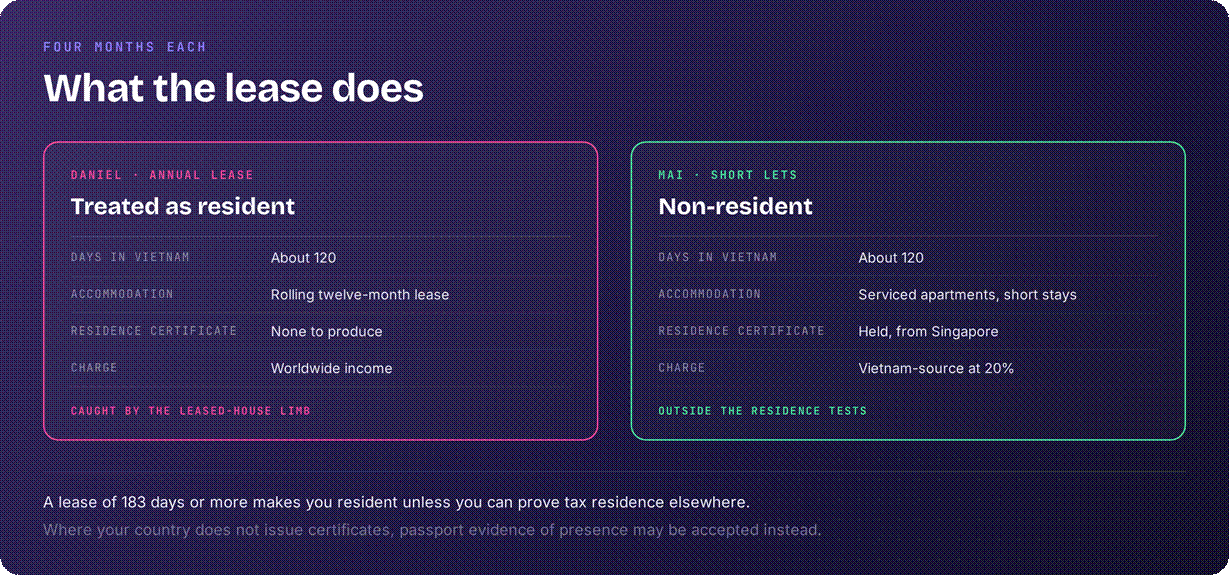
Same days, different answer — the lease decides it.
Your residency status is the first step
You are a Vietnamese tax resident if any one of the following applies:
• You are present in Vietnam for 183 days or more in a calendar year, or in twelve consecutive months counted from your first date of arrival;
• You have a place of habitual residence in Vietnam — a registered permanent residence, or a permanent or temporary residence card; or
• You have a leased house in Vietnam under one or more rental contracts with an aggregate term of 183 days or more in the tax year, and cannot prove tax residence in another country.
The lease limb is the trap. Signing a twelve-month apartment contract — the normal arrangement in Ho Chi Minh City or Hanoi — creates the condition regardless of how much time you actually spend there. The escape is documentary: a residence certificate from another country. Where your home country does not issue one, a passport copy evidencing your periods of presence may be accepted instead.
Maintain accurate records of:
• Arrival and departure dates, and your first date of arrival in Vietnam;
• Rental contracts, with start dates and aggregate terms;
• Any residence card held, permanent or temporary;
• A residence certificate from your other country, if obtainable;
• Days present across both the calendar year and rolling twelve months; and
• Which of the two twelve-month bases applies in your first year.
The new scale from January 2026
The schedule was cut from seven brackets to five, with wider bands and the top rate now reached at a higher point. Rates apply to monthly taxable income:
Monthly taxable income | Rate |
Up to VND 10 million | 5% |
Over VND 10 million to 30 million | 10% |
Over VND 30 million to 60 million | 20% |
Over VND 60 million to 100 million | 30% |
Above VND 100 million | 35% |
Personal deduction | VND 15.5 million a month |
Dependant deduction | VND 6.2 million a month each |
Non-residents | 20% flat on Vietnam-source employment income |
The personal deduction rose from VND 11 million to VND 15.5 million a month, and the dependant deduction from VND 4.4 million to VND 6.2 million. The top 35% rate previously began at VND 80 million a month and now begins at VND 100 million.
Income earned in 2025 is finalised under the old rules. The seven-bracket schedule and the lower deductions still apply to that year, so the first return under the new system covers 2026.
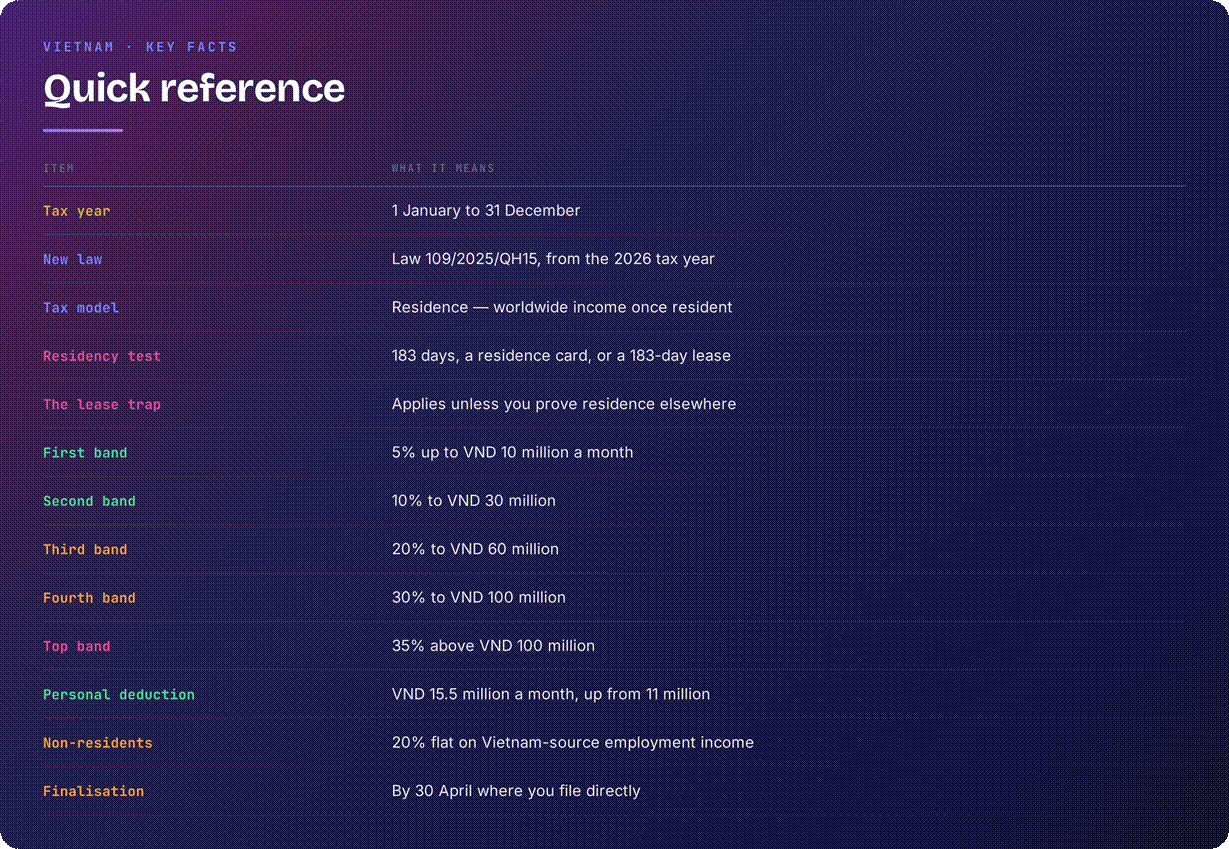
The Vietnamese position at a glance.
A correction worth making
Several widely circulated summaries state the new intermediate bands as 15% and 25% rather than 10% and 20%. The enacted figures are the lower pair, and this can be checked against the statutory quick-deduction formula for the fourth band, which only reconciles on the 10% and 20% reading.
The difference is not trivial. On a monthly taxable income of VND 60 million the two readings produce VND 8.5 million and VND 11 million of tax respectively — a gap of nearly thirty per cent. If you are working from a summary, check which version it uses.
What else the new law brings
The reform added a substantial list of newly exempt income categories, weighted toward education, healthcare, green projects and high technology, and introduced a five-year exemption for qualifying high-tech professionals. It also extended coverage explicitly to income from digital platforms, e-commerce and certain digital asset transactions.
Detailed implementing guidance on some measures came through a decree and circular during 2026, and a few areas remain to be worked through in practice. Where a specific exemption matters to your position, confirm the current guidance rather than relying on the headline announcement.
Case study: Daniel signs a twelve-month lease
Daniel spends about four months a year in Da Nang and the rest across Thailand and Malaysia. He keeps an apartment in Da Nang on a rolling annual lease because it is cheaper than repeated short lets.
He has never approached 183 days in Vietnam and assumes he is a non-resident. But the lease alone satisfies the third limb, and unless he can produce a tax residence certificate from another country, he can be treated as a Vietnamese tax resident — with worldwide income in charge.
His position is fixable, but the fix is a document from elsewhere rather than an argument about days. Someone genuinely resident nowhere has nothing to produce, which is exactly who the rule is aimed at.
Self-employment: the lump-sum method has gone
Anyone freelancing, consulting or running a small business in Vietnam is in the middle of the largest change to their tax position in years, and it is separate from the employment reform above.
For decades, business households and business individuals paid under the lump-sum method, known as khoan. The tax authority set a fixed revenue figure for the whole year and the taxpayer paid on that, regardless of what they actually earned. It was simple and widely criticised as opaque.
From 1 January 2026 the lump-sum method is abolished. Business households and individuals move to self-declaration and self-payment, under the reform roadmap set out in Resolution 68-NQ/TW running from 2025 to 2028. The business licence fee was abolished at the same time under Resolution 198/2025/QH15.
The rates themselves are a percentage of revenue rather than of profit, and they are low. Below the exempt threshold nothing is payable at all. Above it, the charge runs from around 0.5% to 5% of revenue depending on the activity, with distribution of goods at the bottom of that range, services in the middle and asset leasing and agency commission at the top.
The threshold is moving, and it is not settled
This is the part to watch, because published figures contradict each other and the position is genuinely in flux.
The exempt threshold had stood at VND 100 million of annual revenue for years. From 1 January 2026 it rose to VND 200 million. Since then the Ministry of Finance has proposed raising it substantially further, to VND 500 million, and figures as high as VND 1 billion have been put forward in the public debate.
The practical consequence is that a freelancer at the lower end may be outside the charge entirely, but which figure applies to a given year needs confirming against the current position rather than taken from a summary. Sources written even a few months apart give different numbers.
A new option: tax on profit rather than revenue
The Personal Income Tax Law 2025 added something genuinely useful for anyone whose margins are thin.
For business households and individuals with annual revenue above VND 500 million and up to VND 3 billion, tax may be calculated on income rather than on revenue, meaning revenue less expenses, at a rate of 15%. Crucially, the taxpayer can choose between the percentage-of-revenue method and the net income method.
That choice matters enormously and mirrors the point made elsewhere in this series about gross-revenue taxation. A consultant with very low costs is usually better off on the percentage-of-revenue basis, where 2% of turnover is a small number. A business with heavy input costs and a slim margin may do far better paying 15% on actual profit. Model both before electing.
Above VND 3 billion of annual revenue, obligations step up again and the treatment moves closer to that of an enterprise.
Filing and the compliance calendar
The Vietnamese tax year follows the calendar year, except in the first year of arrival, where a twelve-month period from the date of first arrival can apply instead. Employers withhold monthly or quarterly.
Annual finalisation is generally due by the end of the third month after the year end where an employer or authorised agent files, and by the end of the fourth month — 30 April — where the individual finalises directly. Individuals with straightforward affairs and nothing owing may not need to finalise at all, though doing so keeps the record clean.
Prepare in good time:
• A tax code and registration of any dependants claimed;
• Rental contracts and their aggregate terms;
• A foreign residence certificate, if you are claiming non-residence;
• Records of worldwide income if you are resident;
• Evidence of foreign tax paid, for treaty relief; and
• Your finalisation route — employer, agent, or direct.
Timing matters, but the lease matters more
Model your position before you sign anything, considering:
• Whether any rental contract reaches an aggregate of 183 days;
• Whether you can obtain a residence certificate from another country;
• Which twelve-month basis applies in your first year of arrival;
• Whether your income sits above the new VND 100 million monthly band;
• What the higher personal and dependant deductions are worth to you;
• Whether any of the new exemptions apply to your work; and
• Whether Vietnam has a treaty with your other country, as it has over eighty.
Your Vietnam checklist
1. Establish whether you are taxed as an employee or a business individual;
2. Note the lump-sum khoan method ended on 1 January 2026;
3. Confirm the current exempt revenue threshold for your year;
4. Compare the percentage-of-revenue method against the 15% profit method;
5. Check the aggregate term of every rental contract against 183 days;
6. Obtain a residence certificate from your other country if you can;
7. Count days against both the calendar year and rolling twelve months;
8. Establish which basis applies in your first year of arrival;
9. Use the enacted 10% and 20% intermediate bands, not 15% and 25%;
10. Apply the higher VND 15.5 million personal deduction from 2026;
11. Register any dependants to claim the VND 6.2 million deduction;
12. Remember 2025 income is finalised under the old seven-band schedule;
13. Check whether any of the new exemptions apply to your work; and
14. Confirm your finalisation route and deadline.
Frequently asked questions
How is self-employment income taxed in Vietnam?
On a percentage of revenue rather than profit. Below the exempt threshold nothing is payable. Above it the charge runs from around 0.5% to 5% of revenue depending on the activity, with goods distribution at the bottom of the range, services in the middle and asset leasing and agency commission at the top.
What changed for business households in 2026?
The lump-sum method, khoan, was abolished from 1 January 2026 and replaced by self-declaration and self-payment, under the reform roadmap in Resolution 68-NQ/TW. The business licence fee was abolished at the same time under Resolution 198/2025/QH15.
What is the tax-exempt revenue threshold?
It rose from VND 100 million to VND 200 million a year from 1 January 2026. The Ministry of Finance has since proposed raising it to VND 500 million, and figures as high as VND 1 billion have been discussed. The position is unsettled, so confirm which figure applies to your year.
Can I pay tax on profit instead of revenue?
For revenue above VND 500 million and up to VND 3 billion, yes. The Personal Income Tax Law 2025 allows tax to be calculated on income, being revenue less expenses, at 15%, and the taxpayer may choose between that and the percentage-of-revenue method.
Which method should I choose?
It depends entirely on margin. A consultant with low costs is usually better off on the percentage-of-revenue basis, where a small percentage of turnover is a small number. A business with heavy input costs may do better paying 15% on actual profit. Model both before electing.
What changed in Vietnam from January 2026?
The progressive schedule was cut from seven brackets to five, the personal deduction rose from VND 11 million to VND 15.5 million a month, and the dependant deduction from VND 4.4 million to VND 6.2 million. The top 35% rate now starts at VND 100 million a month rather than VND 80 million.
What are the new rates?
5% up to VND 10 million a month, 10% to VND 30 million, 20% to VND 60 million, 30% to VND 100 million, and 35% above that. Several circulating summaries give the middle bands as 15% and 25%, which is wrong.
Can a rental contract make me tax resident?
Yes. A lease or leases with an aggregate term of 183 days or more in the tax year makes you resident unless you can prove tax residence in another country — regardless of how many days you actually spend in Vietnam.
How do I prove residence elsewhere?
Normally with a residence certificate from the other country’s tax authority. Where that country does not issue them, a passport copy evidencing your periods of presence may be accepted instead.
Does Vietnam tax my foreign income?
For residents, yes — worldwide income is within the charge. Non-residents are taxed only on Vietnam-source income, with employment income at a flat 20% and other categories at their own rates.
Which rules apply to my 2025 income?
The old ones. Income earned in 2025 is finalised under the seven-bracket schedule and the lower deductions. The new system applies to income earned from 1 January 2026.
Are there new exemptions?
Yes. The reform added a range of exempt categories weighted toward education, healthcare, green projects and high technology, including a five-year exemption for qualifying high-tech professionals. Confirm the current implementing guidance before relying on a specific one.
When is the annual finalisation due?
Generally by the end of the third month after the year end where an employer or authorised agent files, and by 30 April where you finalise directly. Individuals with simple affairs and nothing owing may not need to finalise.
Official sources and further reading
• General Department of Taxation, Vietnam
Important information
This article is general information and does not constitute tax, legal, immigration or financial advice, and does not create a client relationship. Tax outcomes depend on travel history, income sources, treaty status and the law applying to the relevant year. Rates, thresholds and regimes change, and some measures described may be proposed rather than enacted; this article reflects our understanding as at the date of publication. Obtain advice from a suitably qualified professional before acting or refraining from action.
