
Zambia gives a reasonable tax-free band and then moves through it quickly. The top rate of 37% engages at around USD 4,250 of annual income — very early by any international standard.
Zambia’s PAYE has four bands: 0% on the first ZMW 61,200 a year, 20% to ZMW 85,200, 30% to ZMW 110,400 and 37% above that.
The tax-free band is the redeeming feature — ZMW 5,100 a month removes lower earners from the charge entirely. What follows it is steep. The 37% top rate engages at ZMW 110,400 a year, which at mid-2026 exchange rates is roughly USD 4,250.
That is the figure to hold onto. A top marginal rate arriving at around four thousand dollars of annual income is very early indeed, and it is the single most consequential fact about the Zambian position for anyone earning at a professional level.
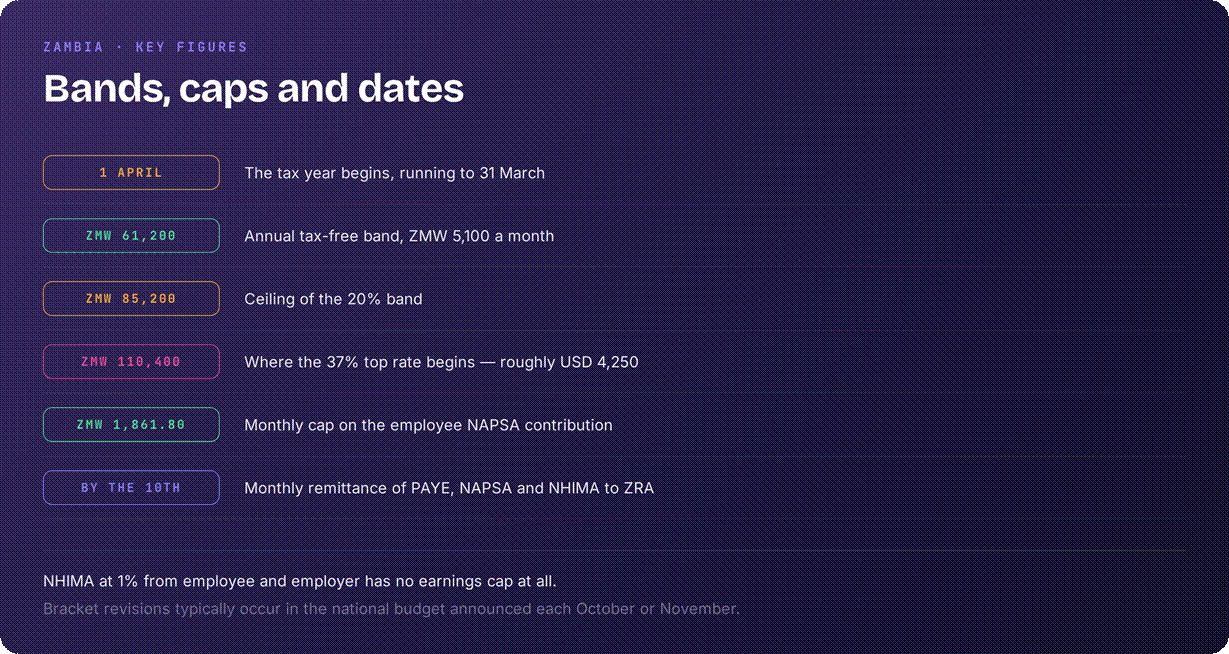
Where each band ends, and what sits alongside.
The tax rates
Annual income (ZMW) | Monthly (ZMW) | Rate |
0 to 61,200 | 0 to 5,100 | 0% |
61,201 to 85,200 | 5,101 to 7,100 | 20% |
85,201 to 110,400 | 7,101 to 9,200 | 30% |
Above 110,400 | Above 9,200 | 37% |
NAPSA, employee | Capped at ZMW 1,861.80 a month | 5% |
NAPSA, employer | Same cap | 5% |
NHIMA, employee | No cap | 1% |
NHIMA, employer | No cap | 1% |
Only the portion of income falling within each band is taxed at that rate — the 37% applies to the excess above ZMW 110,400, not to the whole salary. That is worth stating because the early arrival of the top rate makes it easy to overstate the effect.
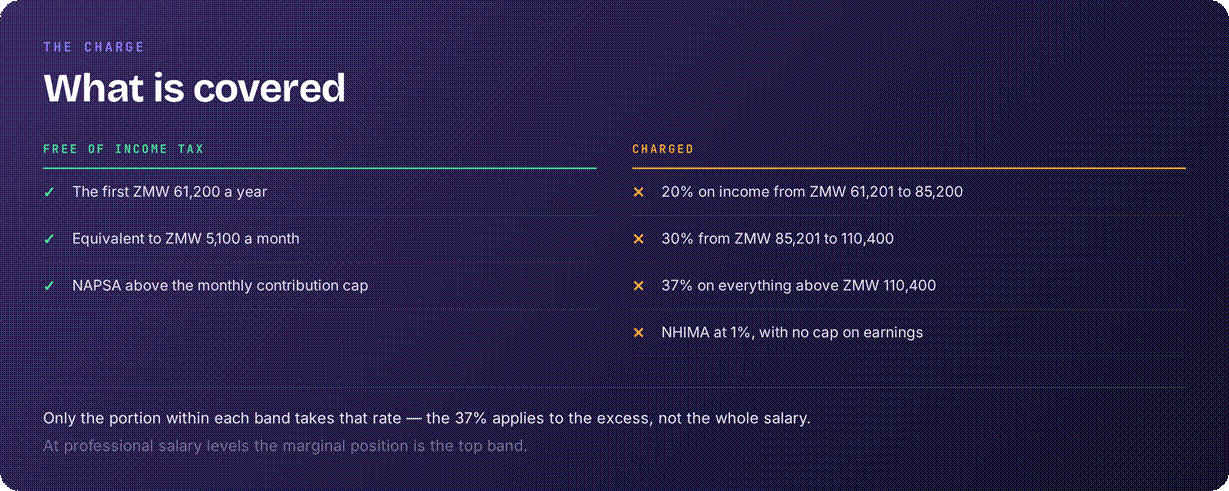
What the tax-free band covers, and what it does not.
Your residency status and the contributions
Alongside PAYE, two mandatory deductions apply. NAPSA, the National Pension Scheme Authority contribution, is 5% from the employee and 5% from the employer, with the employee portion capped at ZMW 1,861.80 a month. NHIMA, the National Health Insurance contribution, is 1% from each with no earnings cap.
The absence of a cap on NHIMA matters for higher earners, because it continues to apply to the whole of income rather than stopping at a ceiling.
Maintain accurate records of:
• Monthly income against each of the four bands;
• The April-to-March tax year rather than the calendar year;
• NAPSA contributions against the monthly cap;
• NHIMA contributions, which are uncapped;
• Which year’s brackets apply to the period; and
• The budget announcement cycle, for changes.
What makes Zambia workable
The position has some genuine merits alongside the early top rate:
• A ZMW 61,200 tax-free band, removing lower earners from the charge entirely;
• A genuinely progressive structure, so the 37% applies only to the excess;
• NAPSA capped at ZMW 1,861.80 a month for the employee portion;
• A clear monthly remittance deadline, the 10th of the following month;
• Bracket revisions announced predictably in the October or November budget; and
• Rates that have been stable since January 2025.
The honest qualification is the one the article is built around. A 37% marginal rate arriving at roughly USD 4,250 of annual income means that almost any professional salary sits in the top band, so the effective rate for an expatriate is likely to be close to the headline.
Case study: where the bands run out
Someone on ZMW 120,000 a year pays nothing on the first ZMW 61,200, 20% on the next ZMW 24,000, 30% on the following ZMW 25,200 and 37% on the ZMW 9,600 above ZMW 110,400 — around ZMW 15,912 of income tax.
That is an effective rate of about 13% on the whole salary, which sounds moderate. But every further kwacha earned is taxed at 37%, plus 5% NAPSA up to the cap and 1% NHIMA without one.
For anyone negotiating a package, the marginal position matters more than the effective one — and in Zambia the marginal position at professional salary levels is the top band.
Filing and the compliance calendar
The tax year runs 1 April to 31 March, which is worth noting for anyone arriving from a calendar-year system. PAYE and both contributions are remitted to the Zambia Revenue Authority monthly, by the 10th of the following month.
The current brackets have been in effect since January 2025, and bracket revisions typically occur in the national budget announced each October or November.
Prepare in good time:
• Registration with the Zambia Revenue Authority;
• Payroll records on the April-to-March year;
• NAPSA calculations against the monthly cap;
• NHIMA calculations with no cap applied;
• Confirmation of which year’s brackets apply; and
• Monthly remittance by the 10th.
Model the marginal rate
Consider:
• That 37% engages at roughly USD 4,250 of annual income;
• That the ZMW 61,200 band still removes lower earners entirely;
• That only the excess above each threshold takes the higher rate;
• That the tax year runs April to March;
• That NAPSA is capped but NHIMA is not;
• That brackets are revised in the October or November budget; and
• That the marginal position matters more than the effective one when negotiating.
Your Zambia checklist
1. Note the ZMW 61,200 annual tax-free band;
2. Model where ZMW 110,400 sits against your salary;
3. Expect the 37% marginal rate at professional levels;
4. Remember only the excess takes the higher rate;
5. Work to the April-to-March tax year;
6. Apply the NAPSA cap of ZMW 1,861.80 a month;
7. Apply NHIMA with no cap;
8. Confirm which year’s brackets apply;
9. Watch the October or November budget for changes; and
10. Remit by the 10th of the following month.
Frequently asked questions
What are the Zambian PAYE bands?
0% on the first ZMW 61,200 a year, 20% to ZMW 85,200, 30% to ZMW 110,400 and 37% above that. Only the portion of income within each band is taxed at that rate.
When does the top rate apply?
Above ZMW 110,400 a year, which at mid-2026 exchange rates is roughly USD 4,250 — very early by international standards, so most professional salaries sit in the top band.
What is the tax-free amount?
ZMW 61,200 a year, or ZMW 5,100 a month, which removes lower earners from the income tax charge entirely.
What contributions apply alongside PAYE?
NAPSA at 5% from the employee and 5% from the employer, with the employee portion capped at ZMW 1,861.80 a month, and NHIMA at 1% from each with no earnings cap.
Why does the NHIMA cap matter?
Because there isn’t one. NHIMA continues to apply at 1% to the whole of income rather than stopping at a ceiling, which matters proportionally more for higher earners.
When does the tax year run?
1 April to 31 March, not the calendar year — worth noting for anyone arriving from a January-to-December system.
How often do the brackets change?
The current brackets have been in effect since January 2025. Revisions typically occur in the national budget announced each October or November.
When is PAYE remitted?
Monthly, by the 10th of the following month, to the Zambia Revenue Authority, alongside the NAPSA and NHIMA deductions.
Official sources and further reading
Important information
This article is general information and does not constitute tax, legal, immigration or financial advice, and does not create a client relationship. Tax outcomes depend on travel history, income sources, treaty status and the law applying to the relevant year. Rates, thresholds and regimes change, and some measures described may be proposed rather than enacted; this article reflects our understanding as at the date of publication. Obtain advice from a suitably qualified professional before acting or refraining from action.
