
Zimbabwe sets its PAYE tables in US dollars for formal sector employees. For anyone paid in dollars, that removes the currency risk that usually complicates a Zimbabwean calculation.
Zimbabwe’s PAYE for formal sector employees is levied using USD-denominated tax tables, reflecting the continued use of the US dollar for payroll alongside the ZiG currency introduced in 2024.
That is unusual and genuinely useful. Most jurisdictions with a volatile local currency leave thresholds denominated in it, so the real value of each band erodes between revisions. Zimbabwe sets the thresholds in dollars, so someone paid in dollars faces no gap between what they earn and what the bands measure.
The 2026 bands run 0% on the first USD 1,200 a year, 20% to USD 3,600, 25% to USD 36,000 and 40% above that.
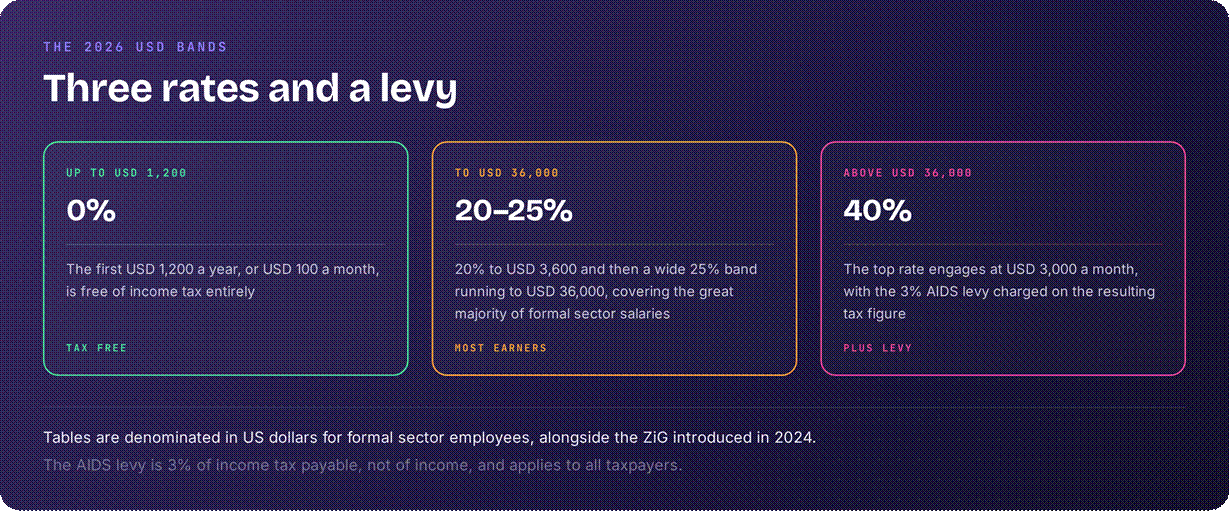
The bands, in the currency they are written in.
The tax rates
Annual income (USD) | Monthly (USD) | Rate |
0 to 1,200 | 0 to 100 | 0% |
1,201 to 3,600 | 101 to 300 | 20% |
3,601 to 36,000 | 301 to 3,000 | 25% |
Above 36,000 | Above 3,000 | 40% |
AIDS levy | On tax payable | 3% |
NSSA, employee | Capped at USD 700 insurable | 4.5% |
NSSA, employer | Capped at USD 700 insurable | 4.5% |
Remittance | By the 10th of the following month | ZIMRA |
The 25% band is wide — it runs from USD 3,601 all the way to USD 36,000, which covers the great majority of formal sector salaries. The 40% rate only engages above USD 3,000 a month.
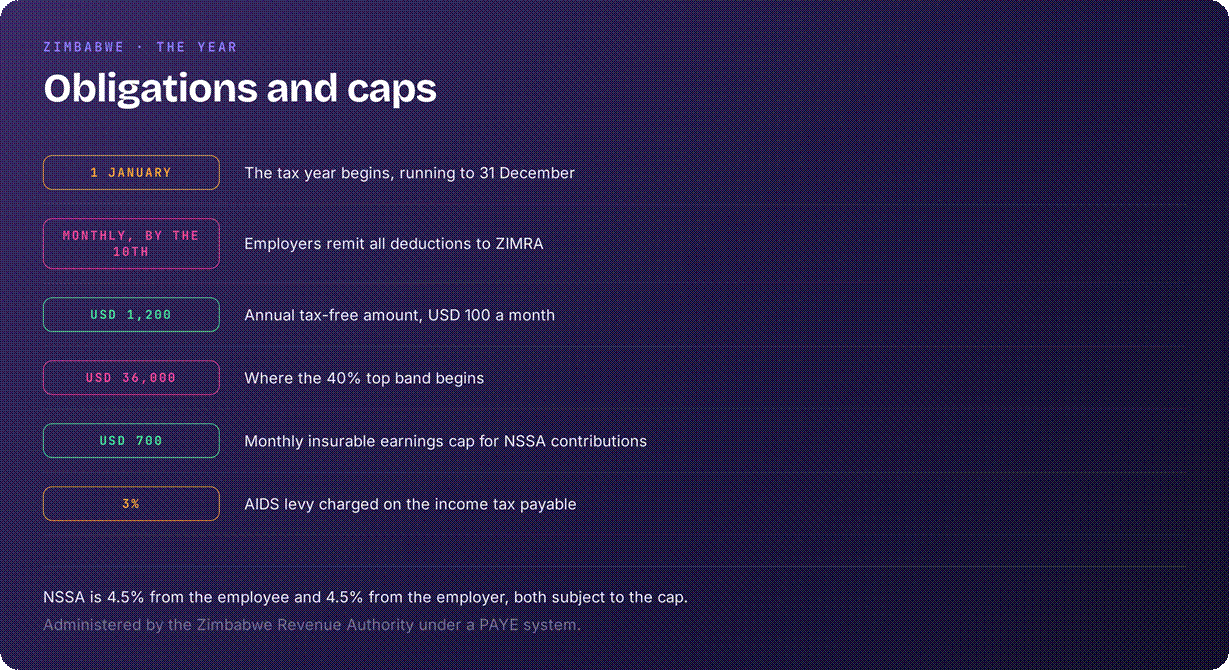
What the year requires, and when.
The AIDS levy explained
The levy is often misunderstood, so it is worth setting out precisely. It is 3% of the income tax payable, not 3% of income. Someone with USD 2,580 of income tax pays a further USD 77.40.
It applies to all taxpayers regardless of health status. Despite its name it functions as a general surcharge on income tax, and there is no exemption or election in relation to it.
Because it is calculated on the tax rather than the income, its absolute value rises with the tax bill but its proportional effect stays constant at 3% of whatever the tax figure is.
What makes Zimbabwe workable
The position has real features worth knowing, alongside well-documented difficulties:
• USD-denominated tax tables, so dollar earners face no currency mismatch between pay and thresholds;
• A USD 1,200 tax-free amount each year;
• A wide 25% band running to USD 36,000, covering most formal salaries;
• NSSA contributions capped at USD 700 a month of insurable earnings, limiting the cost for higher earners;
• A calendar tax year, aligning with most of the world; and
• A clear monthly remittance deadline, the 10th of the following month.
The honest qualifications are substantial. The 40% rate arrives at USD 3,000 a month, which is low for a top band. The 3% levy applies on top of all of it. And the wider economic and currency environment, including the ZiG transition, presents risks that no tax analysis addresses.
Case study: why the dollar tables matter
Consider two countries with a volatile currency. In the first, the tax bands are set in local currency and revised annually. Between revisions, inflation pushes earners into higher bands without their real income changing — a phenomenon known as bracket creep, and it can be severe.
In Zimbabwe, the formal sector tables are set in US dollars. Someone paid in dollars sees the same real thresholds from one month to the next, regardless of what the local currency does.
It does not make Zimbabwe a low-tax jurisdiction — 40% at USD 3,000 a month is not that. But it removes one particular and severe problem that comparable economies leave in place.
Filing and the compliance calendar
Income tax is administered by the Zimbabwe Revenue Authority under a PAYE system. The tax year runs 1 January to 31 December. Employers remit all deductions to ZIMRA by the 10th of the following month.
Prepare in good time:
• Registration with ZIMRA;
• Payroll records in the currency of payment;
• Calculation of the 3% levy on the tax figure, not on income;
• NSSA records against the USD 700 insurable earnings cap;
• Confirmation of which tables apply to your payment currency; and
• Monthly remittance by the 10th.
Check the currency of your tables
Consider:
• That formal sector tables are set in US dollars;
• That this removes bracket creep for dollar earners;
• That the 40% rate arrives at USD 3,000 a month;
• That the AIDS levy is 3% of tax, not of income;
• That it applies to everyone regardless of health status;
• That NSSA is capped at USD 700 of insurable earnings; and
• That remittance is due by the 10th each month.
Your Zimbabwe checklist
1. Confirm which currency tables apply to your payment;
2. Note the USD 1,200 annual tax-free amount;
3. Model the wide 25% band to USD 36,000;
4. Note that 40% arrives at USD 3,000 a month;
5. Calculate the AIDS levy on tax, not on income;
6. Expect the levy regardless of health status;
7. Apply the USD 700 insurable earnings cap to NSSA;
8. Work to the calendar tax year;
9. Remit by the 10th of the following month; and
10. Weigh the wider currency environment alongside the rates.
Frequently asked questions
Are Zimbabwe tax tables really in US dollars?
Yes, for formal sector employees. PAYE is levied using USD-denominated tables, reflecting continued use of the dollar for payroll alongside the ZiG currency introduced in 2024.
Why does that matter?
Because thresholds set in a volatile local currency lose real value between revisions, pushing earners into higher bands without their real income changing. Dollar-denominated tables remove that problem for anyone paid in dollars.
What are the 2026 rates?
0% on the first USD 1,200 a year, 20% to USD 3,600, 25% to USD 36,000 and 40% above that. The 25% band is wide and covers most formal sector salaries.
What is the AIDS levy?
3% charged on the income tax payable, not on income. Someone with USD 2,580 of income tax pays a further USD 77.40. It applies to all taxpayers regardless of health status.
How do NSSA contributions work?
4.5% from the employee and 4.5% from the employer, capped at USD 700 a month of insurable earnings, which limits the cost for higher earners.
When does the top rate apply?
Above USD 36,000 a year, or USD 3,000 a month — low for a top band by international standards, and the 3% levy applies on top of the resulting tax.
When does the tax year run?
1 January to 31 December, aligning with most of the world. Employers remit all deductions to ZIMRA by the 10th of the following month.
Who administers the system?
The Zimbabwe Revenue Authority, under a Pay As You Earn system for formal sector employees.
Official sources and further reading
Important information
This article is general information and does not constitute tax, legal, immigration or financial advice, and does not create a client relationship. Tax outcomes depend on travel history, income sources, treaty status and the law applying to the relevant year. Rates, thresholds and regimes change, and some measures described may be proposed rather than enacted; this article reflects our understanding as at the date of publication. Obtain advice from a suitably qualified professional before acting or refraining from action.
